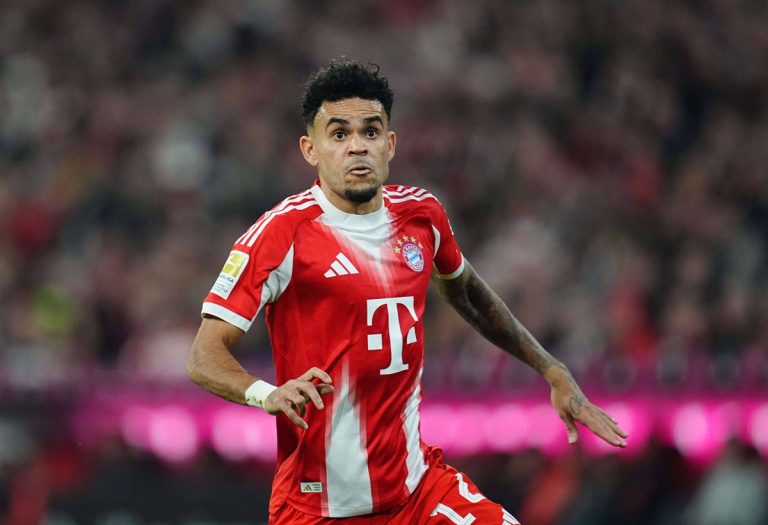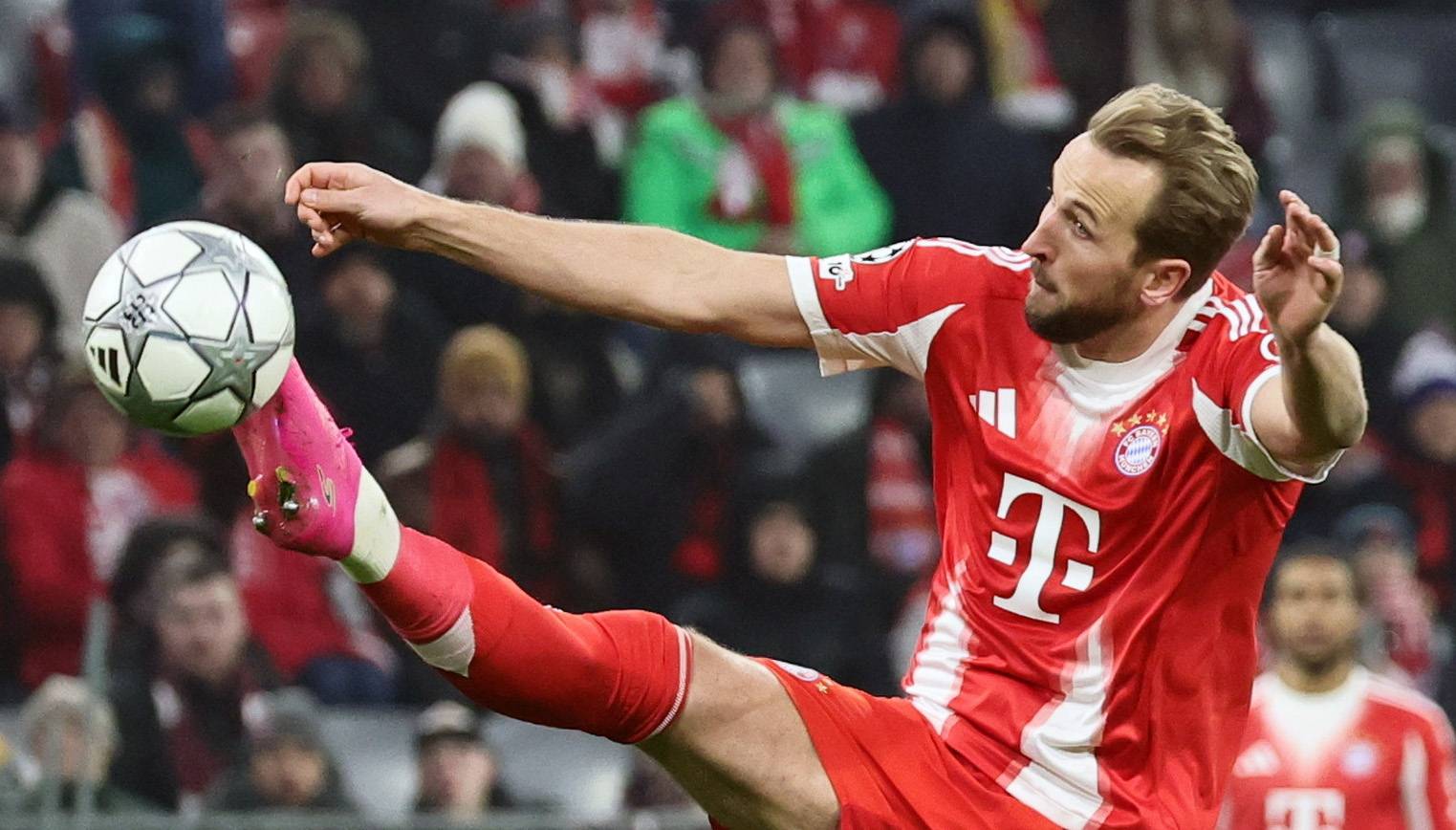
Paris Saint-Germain begin the 2026/27 Champions League as back-to-back winners, Arsenal return after last season’s heartbreaking final defeat, and 29 clubs have already secured league-phase places. Here is everything you need to know before Europe’s biggest club competition begins in full.
Category: Champions League
Date: August 16, 2026
By Abiodun Adewale Adeniyi | Founder & Editor, Beyond the Final Whistle
Champions League | 2026/27 Season Guide
The road to Madrid has begun.
The Champions League 2026/27 season will bring together 36 clubs in Europe’s biggest club competition, but the final lineup is not complete yet.
According to UEFA’s official 2026/27 Champions League guide, 29 teams qualify directly for the league phase, while the final seven places will be decided through qualifying.
The qualifying campaign concludes with the play-off second legs on August 25 and 26 before the league-phase draw takes place on August 27.
And above everything hangs one enormous question:
Can anybody stop Paris Saint-Germain?
PSG enter this season as back-to-back Champions League winners after retaining Europe’s biggest club trophy last season.
Arsenal return with unfinished business.
Real Madrid remain the most successful club in the competition’s history.
Barcelona, Bayern Munich, Liverpool, Manchester City, Inter Milan and Atlético Madrid all have ambitions of their own.
Meanwhile, clubs outside Europe’s traditional superpowers will arrive believing the league-phase format gives them an opportunity to create something special.
This is the Beyond the Final Whistle guide to the Champions League 2026/27 — including the confirmed teams, remaining qualifiers, format, key dates, major contenders and our early prediction.
How Many Teams Are in the Champions League 2026/27?
The Champions League league phase contains 36 clubs.
UEFA confirms that 29 teams qualify directly, while the final seven places are decided through qualifying.
Rather than the traditional eight groups containing four teams each, all 36 clubs compete within one league table.
Each team plays eight different opponents:
Four matches at home.
Four matches away.
Every result contributes to one overall standings table.
UEFA’s official standings information confirms the 36-team, eight-match league-phase structure. You can follow the competition table throughout the season on the official UEFA Champions League standings page.
The format creates more high-profile fixtures earlier in the competition while making every point potentially important.
The 29 Confirmed Champions League 2026/27 Teams
UEFA currently confirms 29 automatic league-phase qualifiers, with seven more places to come through the play-offs.
The confirmed teams are:
England
Arsenal
Aston Villa
Liverpool
Manchester City
Manchester United
England therefore has five confirmed representatives.
Chelsea are not participating in the Champions League this season.
Spain
Atlético Madrid
Barcelona
Real Betis
Real Madrid
Villarreal
Spain also has five confirmed representatives.
Barcelona and Real Madrid naturally attract enormous attention, but Atlético remain dangerous, while Villarreal and Real Betis give Spanish football significant depth.
We recently examined the domestic battle between the Spanish giants in our La Liga 2026/27 title race preview.
Germany
Bayern Munich
Borussia Dortmund
RB Leipzig
Stuttgart
German football sends four clubs directly into the league phase.
Bayern remain the biggest European threat among them, but Dortmund’s Champions League experience and Leipzig’s athletic style make both uncomfortable opponents.
Italy
Como
Inter Milan
Napoli
Roma
Perhaps the most eye-catching name is Como.
Their qualification adds a fascinating storyline alongside established European names Inter, Napoli and Roma.
France
Lens
Lille
Paris Saint-Germain
PSG lead the French contingent as defending champions, while Lens and Lille provide additional representation.
Netherlands
Feyenoord
PSV Eindhoven
Both Dutch giants are back among Europe’s elite.
Portugal
Porto
Sporting CP
Portugal again sends two of its traditional powers directly into the competition.
Belgium
Club Brugge
Türkiye
Galatasaray
Ukraine
Shakhtar Donetsk
Czechia
Slavia Praha
That gives us the 29 confirmed teams.
Seven more will join them after the play-offs.
For the latest official lineup as qualifying progresses, readers can follow UEFA’s Champions League hub.
Which Teams Are Still Fighting for Champions League Places?
Fourteen clubs remain in the play-off round, fighting for the seven remaining league-phase positions.
The play-offs take place across August 18/19 and August 25/26.
The winners of the seven ties advance to the Champions League league phase.
The defeated teams switch to the Europa League league phase.
Because qualifying is still active, this is one section of the article that will need updating once the play-offs conclude.
Rather than relying on an old list after matches have been played, readers can check the current fixtures and results through UEFA’s official Champions League fixtures and results page.
For the complete qualifying explanation and current play-off information, UEFA also maintains its official Champions League qualifying guide.
For the clubs involved, these matches can shape an entire season.
Champions League qualification brings prestige.
It brings Europe’s biggest opponents.
And it brings significant financial rewards.
Two matches can therefore change the direction of a club’s campaign.
When Is the Champions League League-Phase Draw?
The Champions League 2026/27 league-phase draw takes place on Thursday, August 27, 2026.
UEFA has scheduled the draw for 18:00 CET.
The draw will contain all 36 clubs — the 29 automatic qualifiers and seven play-off winners.
You can follow the event directly through UEFA’s official Champions League league-phase draw page.
The draw determines the eight opponents each club faces during the league phase.
And because clubs no longer play identical group schedules, the difficulty of those eight fixtures can become an important part of the competition.
One contender could receive several extremely difficult opponents.
Another might receive a more manageable route.
That does not determine qualification by itself.
But it certainly shapes the challenge.
How Does Champions League Qualification From the League Phase Work?
The standings are crucial.
After all eight league-phase matches:
Positions 1–8
The top eight qualify directly for the Round of 16.
Positions 9–24
These teams enter the knockout phase play-offs.
Positions 25–36
These teams are eliminated from the Champions League.
There is no automatic drop into the Europa League from the league phase.
That makes finishing inside the top eight especially valuable.
The difference between eighth and ninth could mean avoiding two additional knockout matches.
For clubs simultaneously competing for domestic championships, that matters enormously.
Extra fixtures mean more minutes.
More travel.
More fatigue.
More injury risk.
And another opportunity for elimination.
The biggest clubs should therefore be aiming much higher than merely finishing inside the top 24.
Readers who want the detailed competition rules can consult the official UEFA Champions League 2026/27 regulations.
Champions League 2026/27 Key Dates
The tournament began with qualifying in July and runs all the way to June 2027.
UEFA’s current season guide provides the official competition schedule, while its regulations contain the full match calendar.
Some of the biggest dates to remember are:
Play-off first legs: August 18–19, 2026
Play-off second legs: August 25–26, 2026
League-phase draw: August 27, 2026
League phase: September 2026 – January 2027
Knockout phase: February – May 2027
Champions League Final: June 5, 2027
For the official calendar throughout the season, visit UEFA’s 2026/27 Champions League season guide.
Where Is the 2027 Champions League Final?
The road ends in Madrid.
The 2027 Champions League final will be played at Atlético Madrid’s Estadio Metropolitano on Saturday, June 5, 2027.
UEFA officially selected the stadium to host the showpiece event.
The Metropolitano previously staged the 2019 Champions League final, when Liverpool defeated Tottenham Hotspur 2–0.
You can read UEFA’s complete venue information on its official 2027 Champions League final page.
The destination is set.
Now Europe’s best clubs must determine who gets there.
Paris Saint-Germain: The Champions Everyone Must Catch
The conversation about the favorites has to begin with PSG.
Paris Saint-Germain enter the season as back-to-back Champions League winners.
That changes everything.
PSG are no longer entering Europe trying to prove that their project can win the competition.
They have already done it.
Twice consecutively.
Now they are chasing something even more difficult:
Three Champions League titles in a row.
That would put this PSG team into extraordinary historical territory.
Why PSG Are So Difficult to Beat
Modern PSG are different from some previous versions of the club.
For years, European expectations were built around superstar individuals.
Now there is much more structure.
They press collectively.
Their midfield can control possession.
Their wide players can attack space.
And most importantly, they have learned how to survive difficult knockout matches.
That experience matters.
Champions League winners do not dominate every minute of every tie.
Sometimes they suffer.
Sometimes they defend.
Sometimes they need one decisive moment.
PSG have learned how to win those matches.
They are no longer trying to prove they belong among Europe’s champions.
Everyone else now has to remove them.
Arsenal: Can They Go One Step Further?
Few clubs will begin this Champions League campaign with more motivation than Arsenal.
They reached last season’s final and came painfully close to becoming champions of Europe.
That experience changes a team.
Arsenal now understand exactly how small the margins become at the highest level.
One missed opportunity.
One defensive mistake.
One penalty.
Everything can change.
They have already proven they can reach the biggest stage.
Now the challenge is going back and finishing the job.
Their domestic success also means expectations have changed dramatically.
We have explored the challenge of maintaining that level in our analysis asking whether Arsenal can defend their Premier League title.
Europe creates a similar question.
Can Arsenal turn a breakthrough campaign into sustained dominance?
Arsenal’s Biggest Challenge
European opponents now understand them better.
The pressing patterns are studied.
The build-up is studied.
Their set pieces are studied.
Their attacking structure is studied.
Success creates attention.
Mikel Arteta therefore needs evolution rather than repetition.
Arsenal cannot simply reproduce last season and assume the same journey will follow.
They need another layer.
That could be tactical.
It could come through personnel.
Or it could come from players returning more mature because of what they experienced in the final.
Either way, Arsenal belong among the serious contenders.
Real Madrid: European History Always Matters
No discussion about the Champions League can ignore Real Madrid.
Their relationship with this competition is unique.
History does not guarantee success in 2026/27.
But it creates something difficult to measure.
Belief.
Real Madrid rarely enter Europe feeling intimidated by the competition.
The expectation is always to win it.
That mentality becomes particularly powerful during knockout football.
Opponents can dominate Madrid and still feel uncomfortable.
They know the tie may not be over.
They know Madrid have escaped impossible situations before.
And the current squad still possesses elite attacking quality.
Their Champions League story will also be closely connected to the changes taking place domestically.
For more on Madrid’s wider battle in Spain, read our La Liga 2026/27 title race analysis.
Barcelona: Can Their Attack Survive Europe’s Biggest Tests?
Barcelona are another obvious contender.
At their best, they can overwhelm opponents.
They possess technical midfielders.
They possess elite young attacking talent.
And they are comfortable playing proactively.
But Champions League knockout football can expose defensive risk more severely than domestic competition.
High defensive lines invite space.
Aggressive pressing leaves consequences if the press is broken.
And Europe’s strongest counter-attacking teams can punish one mistake immediately.
Barcelona therefore need balance.
Their best football can beat anyone.
The question is whether they can manage matches when the game does not develop exactly as they want.
That may determine whether they become champions or simply one of the tournament’s most entertaining teams.
Bayern Munich: Never Far From the Conversation
Bayern Munich remain one of European football’s traditional giants.
Their standards are different from most clubs.
Reaching the knockout stage is not enough.
Competing domestically is not enough.
Bayern measure themselves against Europe’s best.
Their biggest challenge will be reproducing domestic control against opponents who can match their physical and technical level.
Against weaker opposition, Bayern can dominate territory.
Against PSG, Arsenal, Madrid or Barcelona, matches become much more balanced.
Those are the nights that determine whether a team is genuinely ready to win the Champions League.
Bayern should again be considered a serious threat.
Liverpool: Back Among Europe’s Elite
Liverpool return to the league phase as one of England’s representatives.
Their European history alone makes them dangerous.
But Liverpool’s greatest strength has traditionally come from intensity.
Pressing.
Transitions.
Crowd energy.
Quick attacks after turnovers.
European football often rewards exactly those qualities.
One mistake in possession against an aggressive Liverpool press can become a scoring opportunity within seconds.
We have examined the tactical mechanics behind that approach in our detailed Liverpool pressing tactics analysis.
If Liverpool can combine that intensity with control in possession, they become a difficult opponent for anyone.
Manchester City: Still a Major Threat
Manchester City also return to the competition.
Regardless of changes around the club, their squad quality ensures they remain relevant in any Champions League discussion.
City have spent years developing players comfortable in high-pressure possession football.
They understand how to control territory.
They understand how to attack deep defensive blocks.
And they have experienced almost every type of Champions League match.
The challenge is translating those qualities consistently through the league phase and into spring.
The league-phase format may suit teams with deep squads because eight matches against varied opposition demand flexibility.
City possess that depth.
They cannot be ignored.
Inter Milan: Built for Knockout Football
Inter Milan are another club that should never be dismissed.
Italian teams are often particularly difficult in European knockout football because tactical discipline matters enormously.
Inter understand compactness.
They understand how to defend space.
They understand how to manage different phases of a match.
Champions League football is not always about spectacular attacking performances.
Sometimes a team needs to defend a narrow lead away from home.
Sometimes it needs to survive pressure.
Sometimes controlling the opponent matters more than dominating the ball.
Inter are comfortable in those situations.
That makes them dangerous.
Atlético Madrid: Simeone Knows How to Make Europe Uncomfortable
Atlético Madrid may not enter as favorites.
That probably suits them.
Diego Simeone has spent years constructing teams designed to make elite opponents uncomfortable.
Compact defensive blocks.
Aggressive duels.
Counter-attacking.
Emotional intensity.
Knockout football rewards teams capable of surviving difficult moments.
Atlético understand survival.
And there is something particularly intriguing about this season.
The final will be played in their own stadium.
Imagine Atlético reaching a Champions League final at the Metropolitano.
That possibility alone creates one of the tournament’s most compelling storylines.
Why the League Phase Could Produce Surprises
The modern format changes the psychology of qualification.
Every club faces eight different opponents.
That means adaptation becomes essential.
One week you may face a possession-heavy team.
The next, a counter-attacking side.
Then a physically aggressive opponent.
Then one that defends with everyone behind the ball.
The best Champions League teams must solve different tactical problems.
That is why squad versatility matters almost as much as raw talent.
Pressing Will Again Be Crucial
Modern European football is heavily influenced by what happens immediately after possession changes.
Can a team recover the ball quickly?
Can it escape pressure?
Can it attack before the opposition reorganises?
Those moments often decide elite matches.
Pressing is not simply running toward the ball.
It requires collective movement.
Distances.
Triggers.
Passing-lane control.
Communication.
If one player presses alone, the opponent can usually escape.
If the whole team moves together, the pitch suddenly becomes smaller.
That principle is why tactical organisation will be so important throughout the Champions League 2026/27.
For a deeper explanation of those principles, read our Liverpool pressing tactics analysis.
Five Storylines to Watch
1. Can PSG Win Three Consecutive Champions Leagues?
This is the biggest storyline.
They are back-to-back champions.
Now they have an opportunity to create history.
Every opponent will want to be the team that ends the run.
2. Can Arsenal Recover From Losing the Final?
Arsenal were incredibly close.
The emotional response will be fascinating.
Some teams are damaged by losing finals.
Others use the experience as fuel.
We are about to discover how Arsenal respond.
3. Can Real Madrid Reclaim Europe?
Their European history guarantees nothing this season.
But Madrid’s relationship with the Champions League ensures they are always part of the conversation.
Another deep run would surprise nobody.
4. Which Play-Off Club Will Become the Surprise Package?
Seven clubs will emerge from qualifying.
At least one could become one of the stories of the league phase.
5. Can an Outsider Shock Europe?
The league phase contains several clubs outside the usual list of Champions League superpowers.
That diversity is healthy for the competition.
Football becomes more interesting when expectations are broken.
Beyond the Final Whistle Early Favorites
It is still too early to create a definitive ranking.
The play-offs are not finished.
The league-phase draw has not happened.
And squads can still change.
But based on what we currently know, our early group of major contenders is:
Paris Saint-Germain
Arsenal
Real Madrid
Barcelona
Bayern Munich
Liverpool
Manchester City
Inter Milan
Atlético Madrid belong immediately behind that group and could easily force their way higher.
Our Early Pick: Paris Saint-Germain
Until somebody eliminates PSG, the champions deserve the advantage.
They have won back-to-back Champions Leagues.
They have experience.
They have belief.
And they no longer carry the psychological burden that followed earlier European disappointments.
But winning three consecutively will be incredibly difficult.
Every opponent will study them.
Every weakness will be targeted.
Every major European club will see beating PSG as a statement.
Arsenal want another opportunity.
Real Madrid want their European throne back.
Barcelona want to return to the summit.
Bayern want another European crown.
Liverpool and City remain dangerous.
Inter and Atlético know how to survive knockout football.
PSG remain our early favorites.
But there is very little room between Europe’s best teams.
This Champions League Guide Will Be Updated
This is important.
The article is being published before the final seven league-phase qualifiers are known.
We should therefore update this same article, rather than creating another competing URL.
After the play-off second legs on August 25 and 26, UEFA will have the complete 36-team lineup.
We can then replace the 29-team section with all 36 clubs.
After the August 27 league-phase draw, we can add:
The eight opponents for the major contenders.
The hardest schedules.
The most favorable draws.
The biggest league-phase fixtures.
And our updated prediction.
The official draw information will continue to be available through UEFA’s league-phase draw page.
That approach turns this article into a genuine Champions League pillar page rather than a one-day news story.
Final Whistle
Twenty-nine clubs are already confirmed.
Seven places remain.
Soon there will be 36.
Then the real battle begins.
PSG enter as back-to-back champions.
Arsenal return after reaching the final.
Real Madrid carry the greatest European history of them all.
Barcelona want another era of continental success.
Bayern Munich remain dangerous.
Liverpool and Manchester City represent major English threats.
Inter and Atlético possess the tactical discipline required to survive knockout football.
And somewhere among the outsiders, another surprise may already be developing.
The destination is the Estadio Metropolitano in Madrid on June 5, 2027.
Between now and then:
Eight league-phase matches.
Knockout play-offs.
Round of 16.
Quarter-finals.
Semi-finals.
And one final.
The Champions League 2026/27 is ready.
Our early prediction remains:
Paris Saint-Germain are the team to beat.
But European football rarely follows the script.
Can PSG really win three Champions Leagues in a row?
Can Arsenal turn last season’s heartbreak into triumph?
Will Real Madrid reclaim their European crown?
Or will another team change the entire story?
The road to Madrid is open.
Join the conversation with Beyond the Final Whistle.