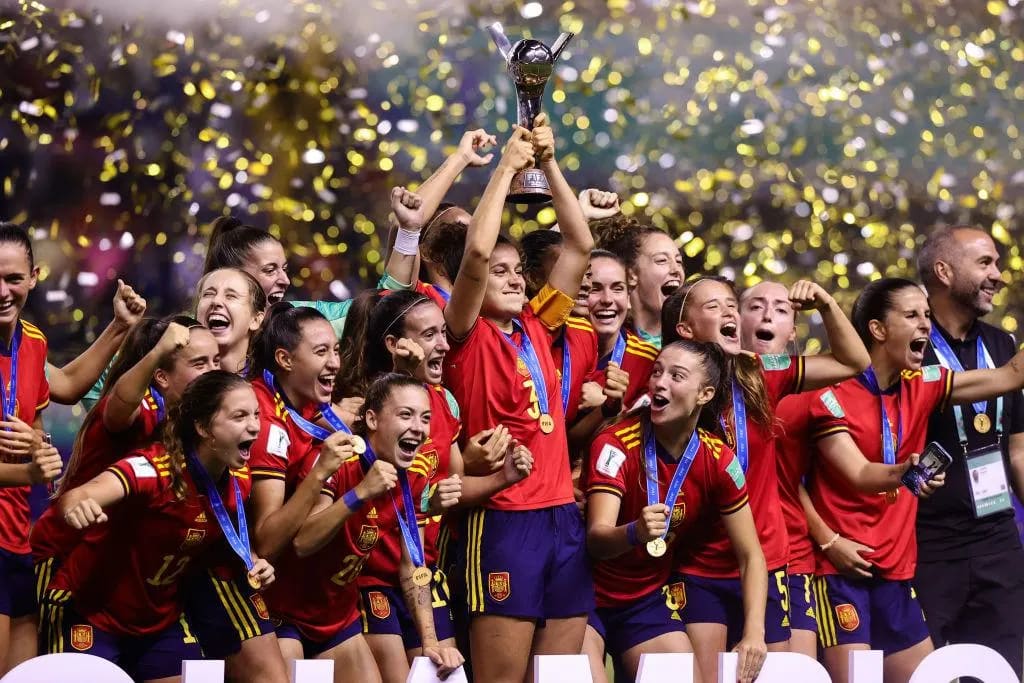
American women's club soccer has two top divisions, two champions and, until now, no way of settling which is best. U.S. Soccer's new Arthur M. Blank Crest Cup changes that: a single-elimination tournament that throws the NWSL and the Gainbridge Super League into one bracket, pays its winner a record $1.1 million and crowns one national champion for the first time.
The competition was announced by U.S. Soccer on Wednesday at its Beyond the 90 summit in Philadelphia. Every professional club from both of the federation's Division I women's leagues will take part — 16 from the NWSL and eight from the Gainbridge Super League, 24 teams in all. Each round is win-or-go-home, the run ends in a championship final, and the total prize pool will exceed $1.5 million, the largest in an American domestic women's competition, according to The Equalizer. The winner also earns a pathway into the Concacaf W Champions Cup, the continent's premier club competition.
U.S. Soccer president Cindy Parlow Cone called it the first time the two Division I leagues will meet in a high-stakes environment. What has not been announced is a start date: as Reuters reported, the launch will be set only after consultation with key stakeholders, and Parlow Cone has indicated the ties will likely be played in midweek slots between league weekends, with ESPN reporting that a 2028 launch is the current expectation. The tournament is funded by, and named after, Arthur Blank — the Atlanta United and Atlanta Falcons owner whose foundation also bankrolled the national training centre that bears his name, and who will soon field his own NWSL expansion side, Atlanta City FC.
A divided game, by design
The split the Crest Cup is trying to heal is a recent one. The NWSL has run since 2013 and become one of the strongest leagues in the world. The Gainbridge Super League only began play in 2024, but it holds the same Division I sanctioning — different owners, different markets, a different calendar, and no obligation ever to meet. Beneath the pair sit hundreds of amateur teams and the vast college system. England has the Women's FA Cup and the American men have the century-old Lamar Hunt U.S. Open Cup; the women's club game here has had nothing to stitch its levels together. U.S. Soccer explicitly compared its new cup to the Women's FA Cup at launch.
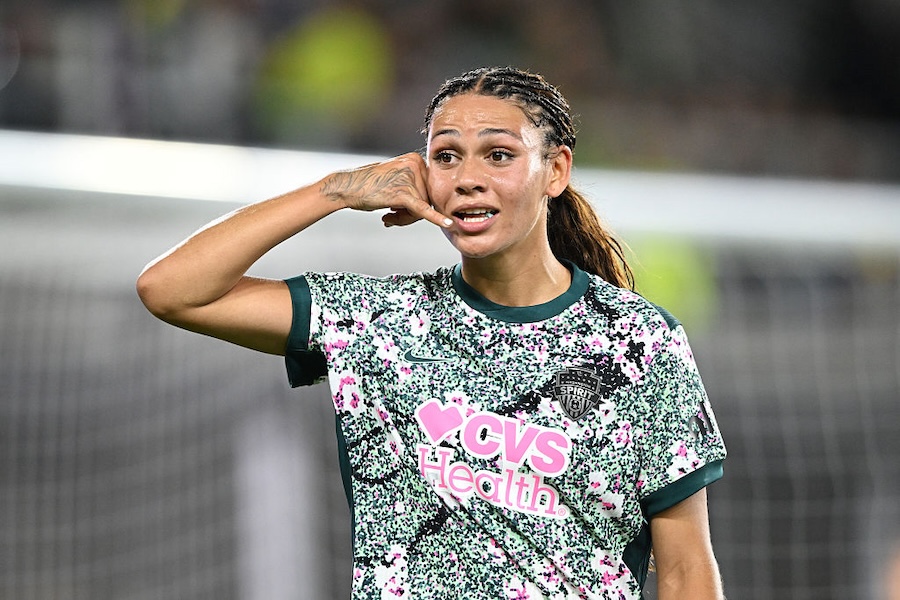
The star power should not be a problem. U.S. Soccer expects NWSL headliners such as Trinity Rodman, Mallory Swanson and Rose Lavelle to feature, and national team head coach Emma Hayes — a serial Women's FA Cup winner with Chelsea — backed the launch, calling domestic cup competitions "an important part of the women's game" and saying the Crest Cup would give talented young players a high-stakes stage. The timing helps, too: the women's game is surging towards next year's World Cup in Brazil, and the USWNT's 2-2 comeback draw against Spain this week underlined the depth of talent the domestic game now holds.
So what? A bridge across the divide — but not yet an open cup
Start with what genuinely changes. For Super League clubs, the prize is not just money, considerable as a $1.1 million winner's cheque would be at that level. In both editions of the Concacaf W Champions Cup played so far, every American place has gone to an NWSL club on league position. The Crest Cup hands the Super League's eight clubs a route to continental football — and, one day, U.S. Soccer hopes, a FIFA Women's Club World Cup place — that simply did not exist last week. For the smaller clubs in the bracket, one home draw against an NWSL giant is a payday, a crowd and a shop window in a single night.
But the honest caveat sits in the fine print. The inaugural edition is not open: it is restricted to the 24 Division I professional clubs. The proposed NWSL second division and WPSL Pro are outside it, and so is the entire amateur game — the very layer whose giant-killings give the FA Cup its mythology. U.S. Soccer and the stakeholders involved say openly that they want the tournament to grow beyond the two leagues in future editions, and Parlow Cone has admitted the federation historically lacked a robust enough amateur structure to attempt this sooner. The calendar is a genuine puzzle as well: the Super League is shifting to a spring-to-fall schedule in 2027, the NWSL calendar is already congested, and midweek cup ties will test squad depth on both sides of the divide.
Beyond the Final Whistle: the Crest Cup is the most significant structural idea in American women's soccer since the Super League itself — not because it crowns a champion, but because it admits the two-league split needs a meeting point. Whether it becomes America's Women's FA Cup or merely a well-funded champions' playoff depends on one decision: opening the door, in time, to the divisions and amateur clubs below. Build the bridge, then let everyone cross it. Can a pros-only cup capture the magic of a truly open one, or is uniting the top two leagues enough for now? Tell us in the comments.