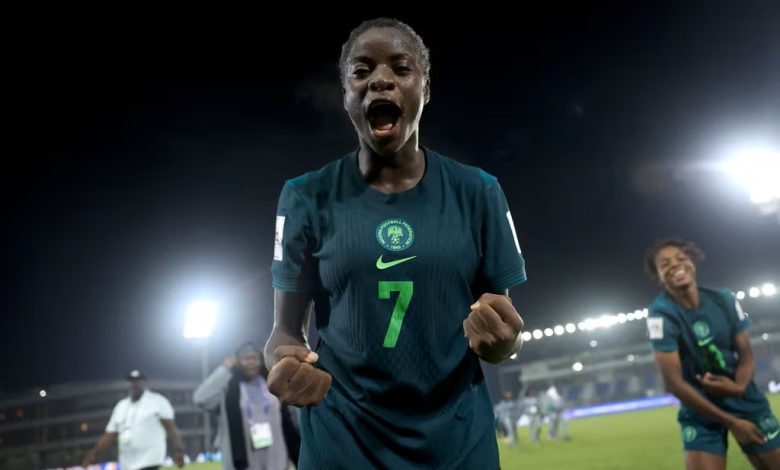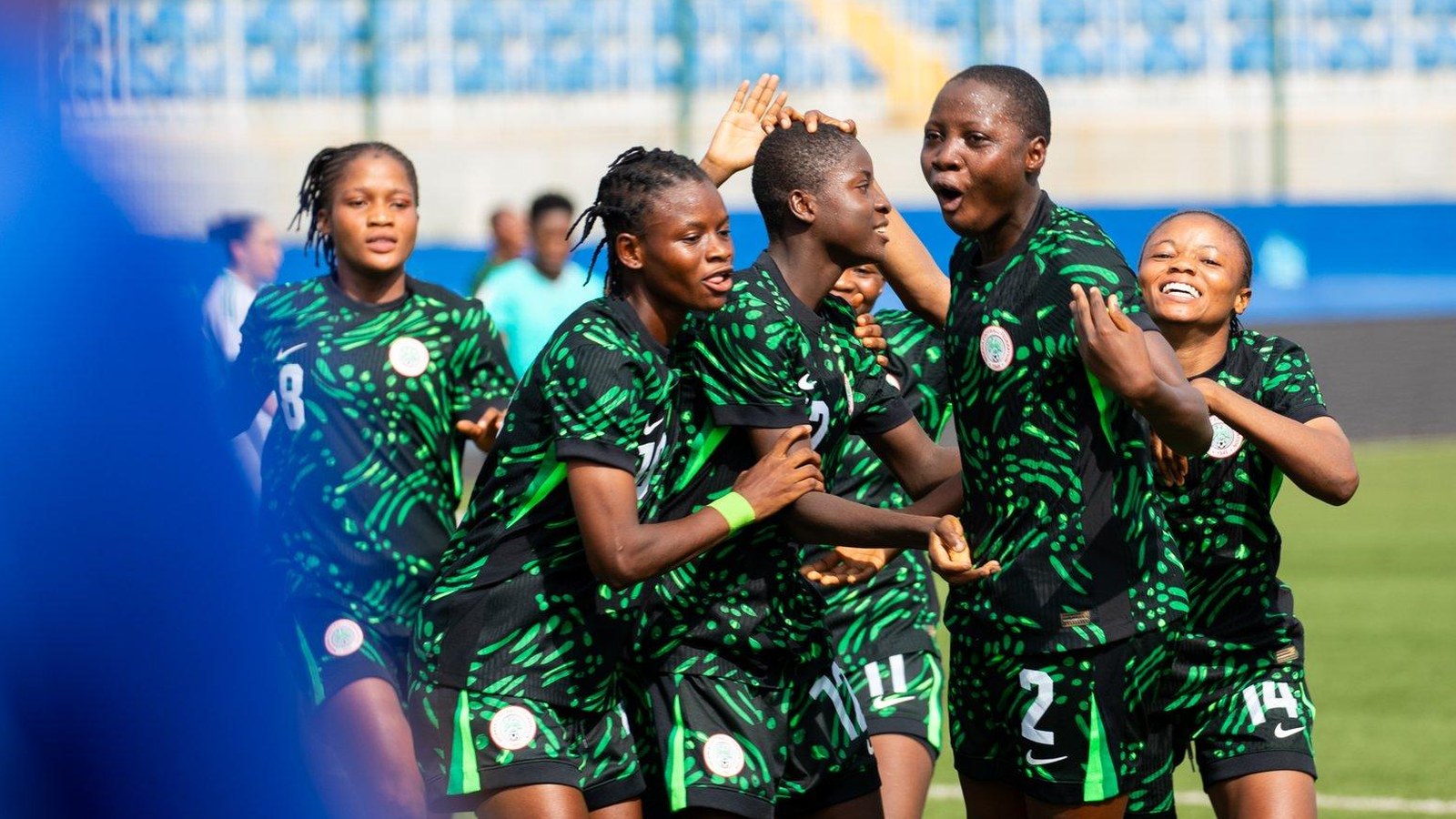
Nigeria's Flamingos are world champions. Akeem Busari's side beat Japan 2-1 in the FIFA U-17 Women's World Cup final at the Mohammed VI Football Complex in Rabat on Saturday, with Awawu Bashiru and Oluebube Umejiaku scoring the goals that delivered Nigeria's first-ever title at this level — and the first ever won by an African team.
The final started the way Nigeria's whole tournament had gone: with the Flamingos refusing to be overawed. Japan, the 2014 champions playing in their fourth final, had won all six of their matches in Morocco without ever looking troubled. But Nigeria had twice been denied by the frame of the post before Bashiru broke the deadlock on 39 minutes, her long-range effort spilled by Japan goalkeeper Kou Kadowaki.
It was Bashiru's third goal of the tournament, and it was no accident that she was the one to strike first. The midfielder had played only 73 minutes as a substitute before the semi-final, yet Busari kept faith with her after her two goals in the 3-1 win over Brazil, and she repaid him again on the biggest stage of all. Nigeria went into half-time 1-0 up and 45 minutes from history.
Umejiaku Doubles the Lead
If Japan expected a breather after the restart, they did not get one. Within two minutes of the second half, Umejiaku made it 2-0, finishing off a Flamingos side that had started the half exactly as they had finished the first — on the front foot and hunting a second goal.
It was Umejiaku's fourth goal of the tournament, and it put Nigeria firmly in control of a final that, as our final preview noted, pitted the tournament's most ruthless side against its most fearless one. Japan had scored 150 goals in this competition since its first edition in 2008, more than any other nation, but on this night they were chasing the game.
Japan Fight Back, Nigeria Hold On
Japan, to their credit, refused to fold. Fuki Ito pulled one back on 80 minutes to set up a frantic finish, and the final ten minutes — plus eleven minutes of stoppage time — tested every nerve in the Nigerian camp. The Flamingos had been here before, though: they had already beaten the two-time defending champions Korea DPR 3-1 in the group stage and come through a quarter-final against Venezuela settled by a late penalty. When referee Natalie Simon finally blew for full time, Nigeria had held on for a 2-1 win and the trophy was theirs.
A Tournament Won the Hard Way
Nobody can say this title was handed to Nigeria. The Flamingos lost their opening game 1-2 to Poland and looked anything but champions in a narrow win over Puerto Rico. Then everything changed: a 3-1 win over defending champions Korea DPR, a 2-1 win over Mexico in the round of 16, a 1-0 quarter-final win over Venezuela, the 3-1 win over Brazil in the semi-final, and now Japan beaten 2-1 in the final. Six straight wins, each one harder than the last, and a first-ever title at the end of it.
The numbers back up what the eye saw. Five different Nigerian players were named Player of the Match across the tournament — a FIFA record for a single edition. Their goals were shared around too, with Umejiaku, Bashiru, Queen Joseph, Oluwakemi Adegbuyi and the rest all contributing. And Busari's selections kept landing: Bashiru, brought in for the semi-final as the one change, scored twice against Brazil and once in the final.
So What?
This is bigger than one trophy. Nigeria are now the first African nation to win the FIFA U-17 Women's World Cup, and the first country to win the tournament at both men's and women's U-17 level — the Golden Eaglets have won the men's title five times. It is also the first time any team has lost their opening match and gone on to lift this trophy, which tells you everything about the character in this squad.
For Nigerian women's football, the timing could not be better. The senior Super Falcons remain Africa's standard-bearers, and now there is a generation of teenagers behind them who have beaten the world. The challenge now is the one every youth triumph brings: making sure these players get the clubs, the coaching and the pathways to become senior internationals. President Bola Tinubu had already charged the team to "go for gold" after the semi-final; the girls delivered, and the country will expect the system around them to match their ambition.
For Africa, the door is open. No African team had ever reached this final before Saturday. Nigeria did not just reach it — they won it, against a Japan side that had never lost a match in this tournament. Every federation on the continent will be asking what Nigeria did differently. The answer is in Rabat: belief, depth, and a coach who trusted his whole squad.
Beyond the Final Whistle verdict: This is the greatest night in the history of Nigerian women's football. From a defeat to Poland in the opener to world champions in Rabat, the Flamingos wrote a story that will be told for decades — and they did it the hard way, beating the defending champions, Brazil and Japan in succession. Bashiru and Umejiaku will take the headlines, but this was a triumph for a whole squad and a whole country. African football has a new crown, and it is green and white. Did the Flamingos just produce Nigeria's greatest ever football achievement? Let us know what you think in the comments.