Club football has suddenly disappeared from the calendar for more than two weeks — but this is not a normal international break. FIFA has introduced a new 16-day September–October window for 2026, allowing national teams to play as many as four matches while the Premier League and other major European leagues pause.
Date: September 22, 2026
By Abiodun Adewale Adeniyi | Founder & Editor, Beyond the Final Whistle
September 22, 2026 | International Football
If you looked at the football calendar after the weekend and wondered why there is no Premier League football again until October, you are certainly not alone.
This international break is considerably longer than football supporters have become accustomed to.
And there is a reason.
For the first time, FIFA has combined what were traditionally two separate international windows in September and October into one extended 16-day period running from September 21 to October 6, 2026.
Under the new structure, national teams can play as many as four matches during a single international window rather than stopping the club season twice for separate two-match periods.
The change was approved as part of FIFA's men's international match calendar for 2025–2030 and comes into effect for the first time this season.
So although the wait for club football feels unusually long, there is an important difference:
There will be no separate October international break a few weeks from now.
Why Has FIFA Changed the International Break?
For years, the early months of the European club season followed a familiar and often frustrating pattern.
The domestic campaign would begin.
A few matches would be played.
Then came the September international break.
Club football would restart.
And just as teams appeared to regain momentum, another international break would arrive in October.
FIFA has now consolidated those two interruptions.
According to FIFA's official international match calendar announcement, the men's calendar from 2026 includes a 16-day, four-match window in late September and early October.
The November window remains a traditional nine-day period allowing two matches, with another two-match window scheduled for March.
In other words, international football isn't necessarily taking more dates from the calendar.
The dates have been reorganized.
Instead of clubs losing players twice across September and October, they now lose them once for a substantially longer period.
When Does the International Break End?
The current international window officially runs from September 21 until October 6.
For Premier League supporters, however, the absence of club football stretches beyond the FIFA dates because of the way domestic fixtures fall around the window.
The Premier League's official international-break schedule confirms the September 21–October 6 window sits between Matchweeks 5 and 6.
Premier League football returns on the weekend beginning October 10.
That means supporters face a significant wait after the September 20 matches.
But once club football returns, there won't be another international interruption in October.
The next men's FIFA window is scheduled for November 9–17.
England Face Four Nations League Matches
The new calendar is particularly obvious when looking at England's schedule.
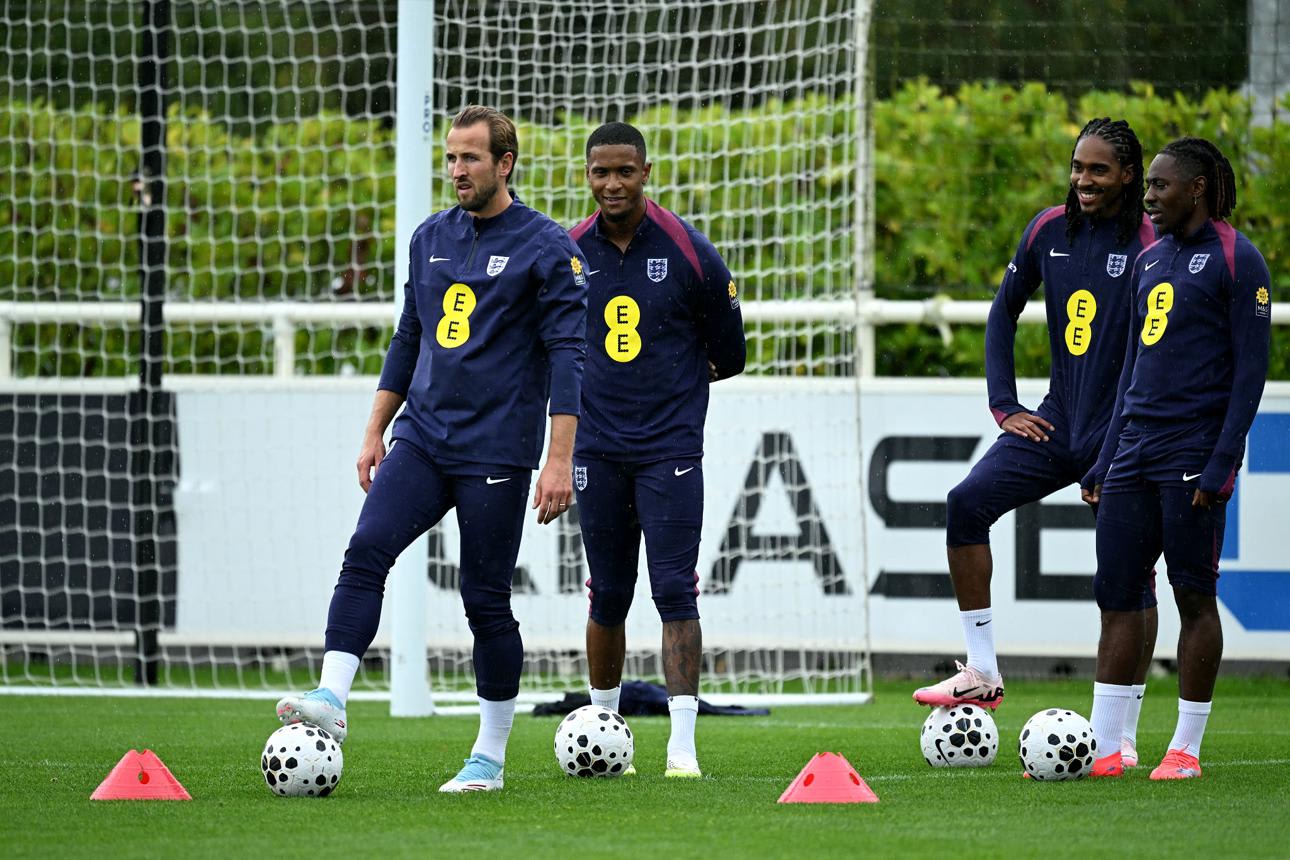
Thomas Tuchel's team will play four UEFA Nations League matches during this single international window.
According to England Football's official fixture schedule, England face:
England vs Spain — September 26, Wembley
Czechia vs England — September 29, Prague
Croatia vs England — October 3, Rijeka
England vs Czechia — October 6, Wembley
Four competitive internationals within 11 days represents a demanding schedule, particularly for players who have already been involved heavily with their clubs.
And England have already experienced the downside.
Injuries Have Already Hit England's Squad
The extended window has arrived at a difficult moment for several Premier League players.
England confirmed on September 21 that Cole Palmer, Declan Rice, Marcus Rashford, Kobbie Mainoo and Tino Livramento had withdrawn from the squad because of injury.
James Garner and Morgan Gibbs-White were subsequently called up.
That immediately raises one of the biggest debates surrounding international football.
Club managers want their best players available.
National-team coaches need competitive preparation.
And players increasingly find themselves caught between the demands of both.
For clubs fighting for the Premier League title, injuries sustained during international duty can alter an entire season.
That will be particularly important for teams such as Arsenal as they attempt to defend their championship.
We recently examined the challenge facing the champions in Mikel Arteta Agrees New Arsenal Contract as Premier League Champions Back Their Manager, with Arteta now attempting to keep Arsenal at the top while balancing the demands placed on his squad.
Nigeria Begin Their Road to AFCON 2027
This international window isn't only about Europe and the Nations League.
Across Africa, attention turns toward qualification for the 2027 Africa Cup of Nations, which will be co-hosted by Kenya, Tanzania and Uganda.
CAF has confirmed that the opening two matchdays of AFCON qualifying will take place between September 24 and October 6, with 48 countries competing across 12 groups.
That includes Nigeria.
The Super Eagles begin their campaign in Group L, where they have been drawn alongside Tanzania, Madagascar and Guinea-Bissau.
However, Nigeria will begin qualifying without Victor Osimhen, with CAF confirming that the striker is unavailable through injury.
Because Tanzania are already qualified as co-hosts, the qualification structure of Group L is particularly important.
CAF says only the highest-placed team other than Tanzania will progress from that group.
That makes Nigeria's opening matches far more significant than they might initially appear.
AFCON Qualification Brings Several Major African Fixtures
Nigeria aren't the only major African nation beginning a new campaign.
The opening round of AFCON 2027 qualification includes several eye-catching fixtures.
CAF has highlighted matches including Côte d'Ivoire against Ghana, Morocco against Gabon, Egypt against Angola and Algeria against Zambia.
Senegal also begin a new era under Patrick Vieira, who takes charge of his first competitive qualifying campaign with the national team.
For African football supporters, therefore, this isn't simply an unwanted pause in European club football.
It marks the beginning of another major qualification journey.
What Does the Longer Break Mean for Premier League Clubs?
From the clubs' perspective, there are advantages and disadvantages.
The biggest potential benefit is obvious.
There is only one interruption instead of two during September and October.
Once Premier League football returns in October, clubs can establish momentum without another international break arriving almost immediately.
But the trade-off is substantial.
Some international players could now play four matches before returning to their clubs.
Add international travel—particularly for players representing countries outside Europe—and recovery becomes an important issue.
A player could leave England, travel thousands of miles, play multiple matches and return only days before their club's next Premier League fixture.
That creates difficult decisions for managers.
Do they immediately restore returning internationals to the starting XI?
Do they rotate?
And what happens when players return carrying minor injuries or fatigue?
Those questions will become increasingly important as the season develops.
The Premier League Title Race Is Temporarily Frozen
The timing of the break also creates an unusual pause in the early Premier League narrative.
Manchester City entered the break after their extraordinary 5–3 victory over Sunderland, maintaining their perfect league start.
We examined that performance in Manchester City 5–3 Sunderland: 5 Things We Learned.
Enzo Maresca's start at City has also placed him into rare Premier League company after five consecutive victories, which we explored in Enzo Maresca Joins Elite Premier League Club After Five Straight Manchester City Wins.
Arsenal, meanwhile, entered the break following a painful 3–0 defeat at Brighton.
Our tactical analysis, Brighton 3–0 Arsenal: 5 Tactical Problems That Destroyed the Champions at the Amex, examined what went wrong for Arteta's side.
Those storylines now sit on hold while international football takes centre stage.
Is the New International Calendar Actually Better?
That may ultimately be the most interesting question.
For supporters who prefer club football, a 16-day international window can feel excessive.
Going almost three weeks between Premier League matchdays is a significant interruption.
But the alternative was two separate breaks.
Under the previous structure, club football would stop in September, restart, and then stop again only weeks later in October.
FIFA's new calendar attempts to solve that problem by consolidating the disruption.
Whether supporters ultimately prefer one long interruption or two shorter ones will become clearer after experiencing the new format.
There is also a player-welfare question.
Fewer separate international windows means less repeated travel.
But allowing four national-team matches during one period creates a different physical challenge.
The success of the change may therefore depend on whether FIFA, national associations and clubs can find the right balance between competitive international football and player recovery.
When Does Normal Club Football Return?
For Premier League supporters, the important date is simple:
October 10.
That's when the domestic league returns after this extended international period.
Until then, attention switches to national teams.
England begin another Nations League campaign.
Nigeria begin their road toward AFCON 2027.
Major European nations return to competitive action.
And across Africa, a new continental qualifying cycle begins.
It may feel like an unusually long international break.
That's because it is.
But it also represents the beginning of a fundamentally different football calendar.
Beyond the Final Whistle, FIFA's new 16-day international window represents a significant change to the rhythm of the club season. One long interruption may prove less disruptive than stopping twice in six weeks, but four international matches, long-distance travel and an already crowded football calendar ensure the debate over player workload isn't going away. For now, club football takes a back seat as international competition commands the stage.
Would you rather have one long 16-day international window like this, or return to separate September and October breaks? Join the conversation on Beyond the Final Whistle.