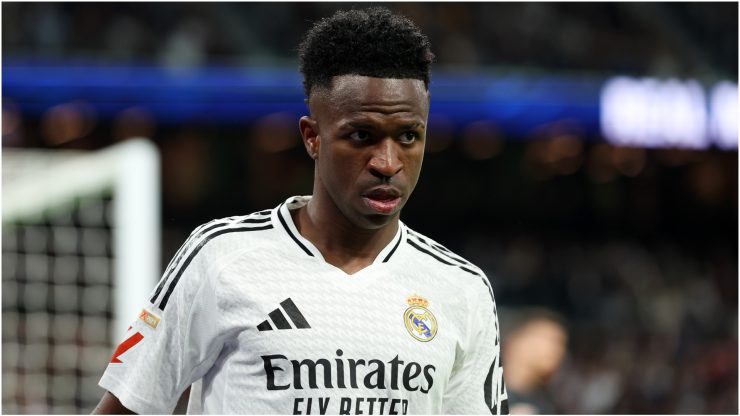
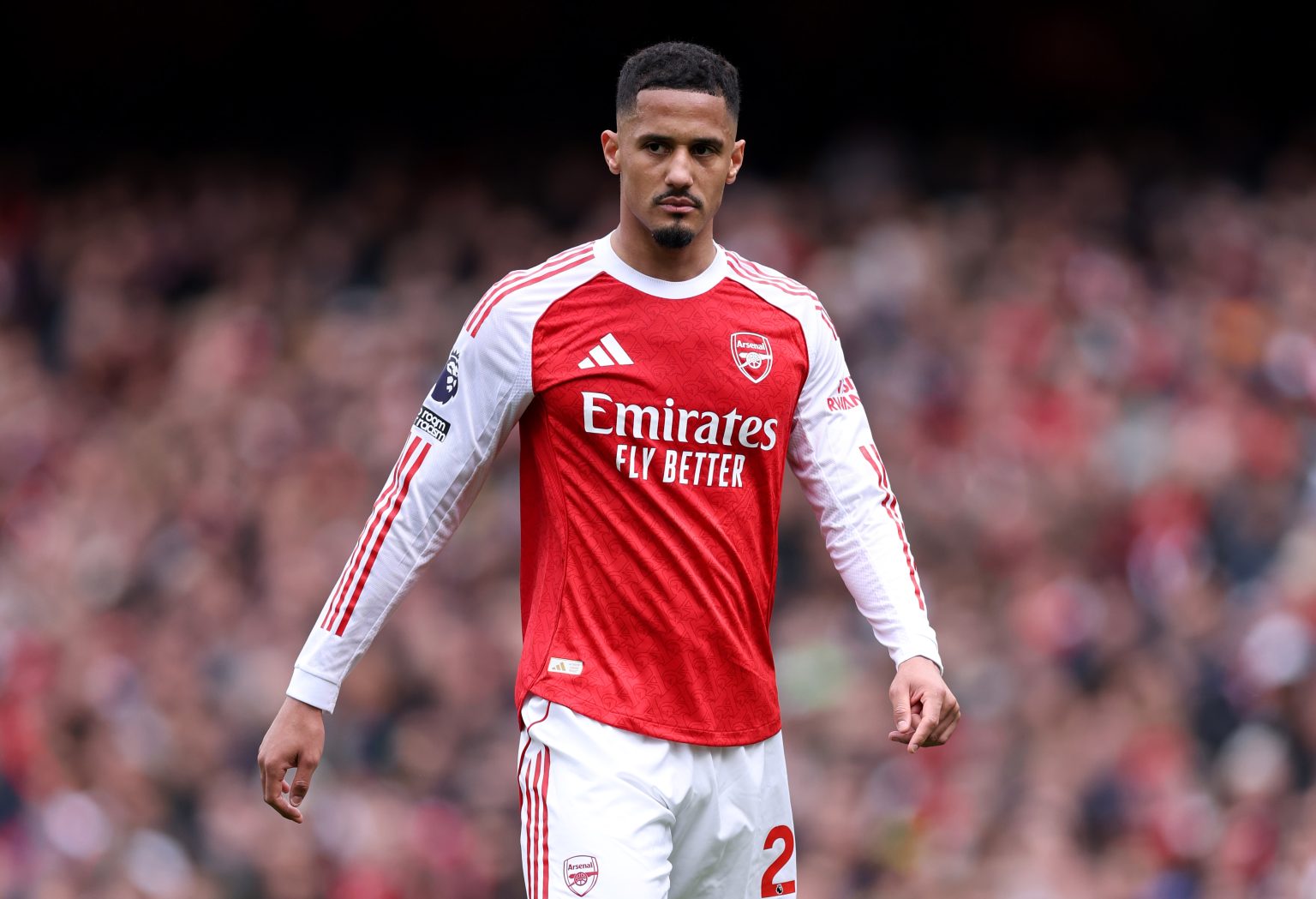
Seventy years of European Cup and Champions League football have produced thousands of great players, but only eleven can start. This is the ultimate Champions League XI of all time — a 4-3-3 built on goals, titles and the nights that defined the competition, from Paolo Maldini's five European Cups to Cristiano Ronaldo's record 140 goals.
Every football fan has argued this team in a pub, a group chat or a comment section. The rules here are simple: Champions League and European Cup pedigree only. Domestic brilliance does not count, World Cups do not count — what counts is what a player did under the lights on Tuesday and Wednesday nights, in the competition that has decided legacies since 1955. Real Madrid, with a record 15 titles, inevitably dominate the conversation, and our ranking of the greatest Champions League players of all time tells the same story. But this XI is not a Madrid tribute act. It is the team we would send out if one match decided the greatest side Europe has ever seen.
Goalkeeper
Iker Casillas (Real Madrid, Porto). The hardest position to fill, because Gianluigi Buffon — arguably the greatest goalkeeper of the modern era — never won this competition, and that has to matter. Casillas did, three times: as a teenager in 2000, again in 2002, and as captain when he lifted La Décima in 2014. He made 181 appearances in the competition, a total only Ronaldo has passed, and his one-on-one save from Arjen Robben in the 2010 World Cup final may belong to another tournament, but his Champions League catalogue is full of the same miracles. When Madrid's Galácticos leaked goals for fun, Casillas was the insurance policy. No goalkeeper has bailed out a superteam more often on the biggest stage.
Defence
Dani Carvajal (Real Madrid). The right-back slot goes to the most decorated full-back of the Champions League era. Carvajal has won this competition six times, a starter in final after final, and his performance in the 2024 final against Borussia Dortmund — a headed opening goal and a defensive masterclass — summed up his career: unspectacular until the moment is biggest, then unbeatable. Trent Alexander-Arnold and Dani Alves have claims, but neither matched Carvajal's habit of simply never losing the games that matter most.
Sergio Ramos (Real Madrid, Paris Saint-Germain, Sevilla). Every great XI needs a villain, and Ramos is the greatest defensive villain the Champions League has produced. Four titles, and one moment that towers over all of them: the 93rd-minute header against Atlético Madrid in the 2014 final in Lisbon, the goal that rescued La Décima and broke Atlético's resistance. Ramos scored in two finals, defended like his life depended on it, and collected cards and trophies in equal measure. Centre-backs are supposed to prevent drama. Ramos manufactured it, at both ends.
Paolo Maldini (AC Milan). The captain of this team, and the easiest selection in the entire XI. Maldini won five European Cups across three decades — 1989 and 1990 in Arrigo Sacchi's great Milan side, 1994 in the 4-0 demolition of Barcelona, then as captain in 2003 and 2007. He played in eight finals, scored the fastest goal in a final, 51 seconds against Liverpool in Istanbul in 2005, and defended for over 20 years at the top level without ever looking hurried. Left-back, centre-back, it made no difference. Maldini is the standard every defender in this competition is still measured against.
Marcelo (Real Madrid). The left-back debate ends with the most decorated defender of the modern era going forward. Marcelo won five Champions Leagues as Madrid's left-back, but calling him a defender is almost an insult — he was a playmaker stationed by the corner flag, a winger in a full-back's shirt whose touch and invention tilted tight knockout ties. His goal against Atlético in the 2014 final sealed La Décima, and across a decade of European nights at the Bernabéu, no left-back has ever given his team more attacking chaos. Roberto Carlos, his predecessor and mentor, is the only rival — and even he would probably pick Marcelo.
Midfield
Toni Kroos (Bayern Munich, Real Madrid). Six Champions League titles — one with Bayern in 2013, five with Madrid — and the most metronomic passing the competition has ever seen. Kroos never sprinted, never panicked and never, ever gave the ball away when a semi-final hung in the balance. His passing accuracy in knockout football bordered on the absurd, and Madrid's three-peat was built on his ability to set the tempo of matches played at the highest possible intensity. If this XI needs to control a final, Kroos holds the remote.
Luka Modrić (Tottenham Hotspur, Real Madrid). The other half of the greatest midfield engine in Champions League history. Modrić has also won the competition six times, and his outside-of-the-boot assist for Rodrygo against Chelsea in 2022 — delivered under total pressure, in a tie Madrid were losing — is the single pass that defines his genius. He arrived in Madrid in 2012 to doubts about his size and price; he left the argument settled forever. Kroos controlled the rhythm, Casemiro (an unlucky omission here) did the tackling, but Modrić was the one who could turn defence into a final-winning attack in two touches.
Zinedine Zidane (Juventus, Real Madrid). The artist of the XI, and the scorer of the greatest goal in the competition's history. Zidane's left-footed volley for Real Madrid against Bayer Leverkusen at Hampden Park in the 2002 final remains the moment every Champions League final is judged by — a ball dropping out of the Glasgow sky, struck so purely that it still looks computer-generated. He lost two finals with Juventus before winning his one title in white, and then, as a coach, won three in a row between 2016 and 2018. Andrés Iniesta and Xavi Hernández, architects of Barcelona's golden age, have the stronger trophy counts — but on one night, with one match to win, Zidane's ceiling was higher than anyone's. This team is picked for one night.
Attack
Lionel Messi (Barcelona, Paris Saint-Germain). On the right of the front three, the second-greatest scorer in the competition's history. Messi's 129 Champions League goals came with four titles, and his finals were personal statements: a towering header against Manchester United in Rome in 2009, then a man-of-the-match performance against the same opponents at Wembley in 2011, when Sir Alex Ferguson called Barcelona the best team he had ever faced. The solo goal against Bayern Munich in 2015, which left Jérôme Boateng on the floor, is replayed a decade later like it happened last week. Others on this list won more European Cups. Nobody played the competition more beautifully.
Karim Benzema (Lyon, Real Madrid). The centre-forward slot is the most argued-over in this team, because Robert Lewandowski — third on the all-time scoring list with 109 goals — has an overwhelming statistical case. But Benzema's 90 goals came with five titles and the greatest individual knockout campaign the competition has ever seen: in 2021-22 he dragged Madrid through Paris Saint-Germain, Chelsea and Manchester City with back-to-back hat-tricks and a semi-final winner, scoring 15 goals in a single season, almost all of them when Madrid were on the brink of elimination. Lewandowski was the more relentless scorer. Benzema was the more decisive one, and finals football rewards decisive.
Cristiano Ronaldo (Manchester United, Real Madrid, Juventus). On the left, wearing the number seven, the king of this competition — and it is not close. Ronaldo is the Champions League's all-time top scorer with 140 goals in 183 appearances, its record appearance holder, a five-time winner and the top scorer in seven separate seasons. He scored in three finals, converted the winning penalty in the 2016 final, and produced the competition's defining individual performance in the 2017 quarter-final demolition of Bayern Munich. UEFA's own all-time statistics and rankings read like his personal honours list. Mr Champions League is not a nickname. It is a job description, and he held the job for fifteen years.
So What Does This XI Tell Us?
Look at the shape of this team and you can read the competition's entire evolution in it. The defence spans from Maldini — a pure defender from the era when Italian sides won finals 1-0 — to Marcelo and Carvajal, full-backs who were really attackers. The midfield tells the story of football's tactical centre of gravity shifting to Spain and Madrid's orbit: control, press-resistance and passing range now outrank the old-fashioned midfield destroyer, which is why Casemiro misses out despite five titles. And the attack proves the Champions League era has been defined by two men to a degree no previous era ever was — Ronaldo and Messi scored 269 goals between them in this competition, a duopoly so total that great scorers like Lewandowski, Raúl (71 goals) and Ruud van Nistelrooy are footnotes by comparison. The full record books on UEFA's all-time scorers list underline just how far ahead of the field those two finished.
It also explains why the debate never dies. Seven of this XI won the bulk of their titles with one club, Real Madrid, whose 15 European Cups make them the competition's gravitational centre — yet the single most beloved performance in the team's spine, Maldini's Milan career, belongs to the club that has spent a decade trying to get back to this level. If you prefer your all-time teams built on the Premier League instead, our Best Premier League XI of All Time makes that argument in full — and not one of its players cracks this European side, which says everything about where the Champions League sits in the hierarchy.
Beyond the Final Whistle Verdict
Here is the arguable truth this XI exposes: the Champions League, for all its global reach, has been a strikingly exclusive club. Ten of these eleven players won their titles with just three teams — Real Madrid, Barcelona and Milan — and the competition's history is really the history of brief dynasties taking turns to own it. The modern super-club era has not changed that; it has hardened it. What has changed is the individual bar. To break into this team now, a player does not need a great season or even a great final — with Mbappé and Haaland already past 70 and 60 goals respectively, the next entrant will need a decade of relentless excellence and, almost certainly, a move to one of the three or four clubs that actually win this trophy. The XI is not closed. But the door is heavier than it has ever been.
Casillas; Carvajal, Ramos, Maldini, Marcelo; Kroos, Modrić, Zidane; Messi, Benzema, Ronaldo. Eleven players, fifty European Cups between them, and one impossible team. But every all-time XI is an argument waiting to happen — Iniesta or Zidane? Lewandowski or Benzema? Buffon or Casillas? Tell us your Champions League XI of all time: who makes your team, and who did we get wrong?