
Every few years, this list needs rewriting — not because the top moves, but because somebody below it takes a step that changes the maths for everyone. That step came on 4 November, when Kylian Mbappé scored at AEK Athens to reach 100 Champions League goal involvements in just 102 games. It was a good moment to stop, take the whole table down from the wall and write it out again properly, with the 2026 numbers in place. This is that list: the all-time Champions League scoring chart as it stands today, who is finished, who is still climbing, and the one African milestone buried in the middle of it that took seventy years to arrive.
First, the ground rules, because this table is argued about more than any other in football. The figures below are the ones published by UEFA and cross-checked against Opta: Champions League goals only, qualifying rounds excluded. Include qualifying and Cristiano Ronaldo edges up to 141 while Mohamed Salah rises to 54 — a different argument for a different day. On the standard measure, the top of the list reads: Ronaldo 140, Lionel Messi 129, Robert Lewandowski 109, Karim Benzema 90, Mbappé 74, Raúl 71, Erling Haaland 62, Harry Kane 58, Thomas Müller 57 and Ruud van Nistelrooy 56, with Thierry Henry and Salah joint next on 50.
140 and 129: two numbers nobody is standing close to
Cristiano Ronaldo — 140 goals in 183 games. Start with the strangest fact on this page: the greatest scorer in the competition's history did not score at all in his first 26 Champions League matches. Ronaldo was a winger when he arrived, all stepovers and crosses, and the goals only began once the winger became a penalty-box forward. From there the numbers turn absurd. One hundred and five of his goals came for Real Madrid, 21 for Manchester United and 14 for Juventus. He was the first player to reach 100, doing it with a hat-trick against Bayern Munich in April 2017, in his 137th appearance. He finished as the competition's top scorer in seven different seasons, more than anyone, and his 17 goals in 2013/14 remains the record for a single campaign — with his own 16 the following-but-one season sitting second. He scored against 38 different clubs, put ten past Juventus alone, shared the record of eight Champions League hat-tricks with Messi, and remains the only man to score in three different finals. Five European Cups, split between United and Madrid, sit underneath all of it.
Lionel Messi — 129 goals in 163 games. If Ronaldo's total is a mountain, Messi's efficiency is the sharper blade: 129 goals at 0.79 per game, the best ratio of anyone in the top five. One hundred and twenty of those goals came for one club, Barcelona — a single-club record Ronaldo never got near with his 105 for Madrid — and the other nine for Paris Saint-Germain. Messi scored against 40 different opponents, more than any player in history, and nine of them against Arsenal alone. He once scored five in a single match, against Bayer Leverkusen in March 2012, something Ronaldo never managed, and he found the net in 18 successive editions of the competition. Any honest version of this list, including our best Champions League XI of all time, ends up as an argument between these two men. The scoring table is the one argument Ronaldo wins outright — by eleven goals, with both totals now final.
Lewandowski's century and Benzema's closing total
Robert Lewandowski — 109 goals in 144 games. The third man on the podium is also the most under-decorated by the conversation around him. Lewandowski is the only player besides Ronaldo and Messi to reach a century, and he did it the hard way, across three clubs: 17 goals for Borussia Dortmund, 69 for Bayern Munich and 23 for Barcelona, making him only the second player, after Ronaldo, to score ten or more for three different teams. His pace was elite in a way the headline total hides — he reached 80 goals in just 100 games, faster than Messi, who needed 102, and far faster than Ronaldo's 116. His fifteen goals in Bayern's triumphant 2019/20 campaign finally ended a twelve-season run in which Ronaldo or Messi had finished top scorer, and his 108th and 109th goals, against Newcastle United in last season's knockout rounds, took him past everyone in history for the number of different opponents scored against: 41.
Karim Benzema — 90 goals in 152 games. Benzema's number is the quietest great total on the list, built on longevity no one else can match in quite the same way: he scored in all eighteen Champions League seasons he played, first for Lyon, where he managed twelve, and then across fourteen years at Real Madrid, where he added 78. For most of that Madrid career he was the supporting act in somebody else's scoring story, which is precisely why his final flourish matters so much. At 34, in 2021/22, he scored fifteen times, won the top-scorer prize for the first and only time, and dragged Madrid to the trophy almost personally through the knockout rounds. His move to Al-Ittihad in 2023 closed the total at ninety — fourth forever, in all likelihood, and a permanent reminder that this list rewards the men who stayed at the summit longest.
Mbappé at 74: fifth place, and the clock is on his side
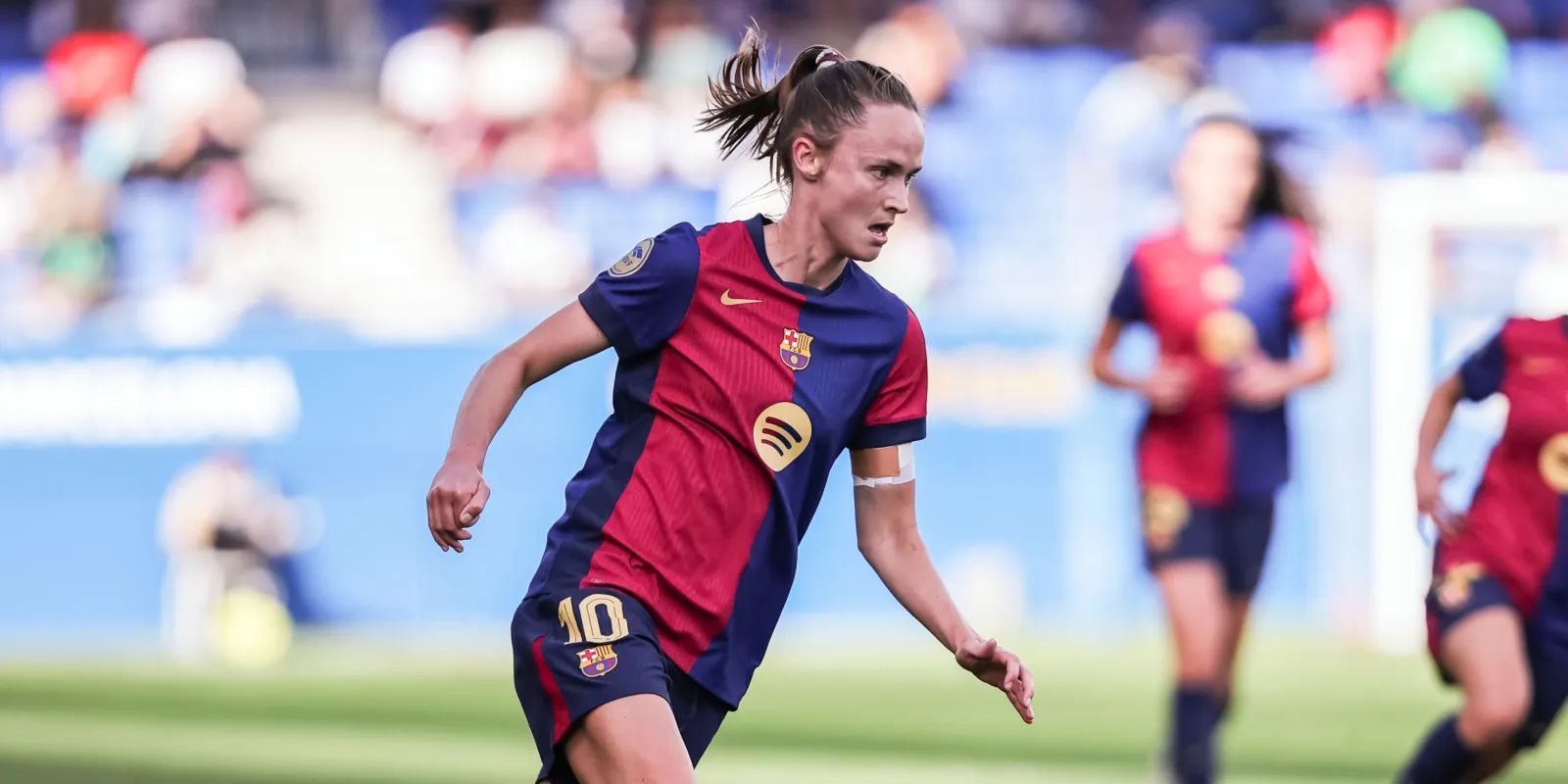
Kylian Mbappé — 74 goals in 102 games. Here is where the list stops being history and starts being a live race. Mbappé's goals split 6 for Monaco, 42 for Paris Saint-Germain and 26 already for Real Madrid, and the AEK Athens goal that took him to 74 also carried the wider milestone: 100 goal involvements, made up of 74 goals and 26 assists, in 102 matches. Only Messi reached that century faster, in 101 games; Lewandowski also needed 102. Mbappé passed Raúl in October, scoring his 72nd goal in Rome on the night he became the youngest player ever to make 100 Champions League appearances, and he arrived there as the holder of the season prize too — his fifteen goals in 2025/26 won the Golden Boot outright, a single-season total bettered only by Ronaldo in the competition's history. He is 27. Everyone above him on this list is finished scoring in it. That is the whole point of his position: fifth today is not his ceiling, it is his starting platform.
Raúl — 71 goals in 142 games. Before the two giants, there was Raúl, and this list should never skip past what he held. The Madrid captain was the first player to fifty Champions League goals, reaching the mark in September 2005, and he owned the all-time record for almost a decade, until Messi and then Ronaldo dismantled it in the space of a few months in late 2014. Sixty-six of his goals came in the white of Madrid and the last five on a late-career adventure at Schalke, where he was still scoring European goals at 33. His ratio, exactly a goal every two games, belongs to an era of fewer matches and tighter football, which is why comparing him directly with the modern men is unfair in both directions at once.
The ratio scandal: Haaland is scoring at a speed this list has never seen
Erling Haaland — 62 goals in 61 games. Read that again. Sixty-two goals in sixty-one appearances is a ratio of 1.02 per game, and nobody else in the top twenty is above 0.80. Haaland scored eight times in six games for Salzburg as a teenager, fifteen in thirteen for Dortmund, and already has 39 for Manchester City, passing Sergio Agüero's club record in this competition earlier this season. The speed records keep falling at a rate that makes the statisticians rewrite their own copy: he reached fifty Champions League goals in just 49 games in September 2025, smashing the previous best of 62 set by Van Nistelrooy, and his 52 goals across his first fifty appearances is another mark nobody had approached. There is a genuine caveat, and it matters for the African reader comparing eras fairly: the expanded modern format hands a forward more matches per season than Raúl or Van Nistelrooy ever had. But a ratio above one goal per game, sustained over sixty matches, is not a format trick. It is the single most violent scoring rate the European Cup has ever recorded.
Harry Kane — 58 goals in 74 games. Kane is the tortoise in a race of hares, and the tortoise is quietly winning on points. Twenty-one of his goals came for Tottenham, in sides that rarely reached the late rounds, and 37 since moving to Bayern Munich, where the supply line finally matches the finisher. He reached fifty in 66 appearances, in a home win over Atalanta in March 2026 — only Haaland and Van Nistelrooy have done it faster, and Messi needed exactly the same number. At 33, time is the one opponent he cannot beat on volume, but the new Bayern Munich deal until 2029 he signed this month guarantees him three more campaigns of deep runs and big nights. Seventy is a realistic landing zone; eighty would put him fourth on this list when he stops, ahead of everyone except the three centurions and Benzema. For a striker England spent a decade calling a nearly man, that would be quite a final word.
Thomas Müller — 57 goals in 163 games, all for Bayern, closes the top nine as its great outlier: a forward on a scorers' list despite spending half his career creating space for the man doing the scoring, with two European Cups to show for a total built on intelligence rather than volume. And Ruud van Nistelrooy — 56 goals in 73 games rounds out the ten, still Manchester United's record scorer in the competition with 35, and for two decades the fastest man ever to fifty before Haaland rewrote that page as well.
Salah's fifty: the African chapter of this list
Now the part of this table that matters most to this site's readers, because for seventy years the all-time Champions League scoring list was a story Europe told about itself. Mohamed Salah — 50 goals in 98 games changed the authorship. When Salah scored his fiftieth, for Liverpool against Galatasaray in March 2026, he became the first African player in history to reach fifty Champions League goals: two for Basel at the very start, one for Roma, and 47 in the red shirt in which he became, by the measure of our ranking of the greatest African players in Premier League history, the defining African footballer of his generation in England. His club story has since moved on from Anfield, and his Premier League record is closed, but this European total is set in stone alongside it — a landmark no African had touched in the competition's first seven decades.
Behind him, the African line on this list is shorter than it should be, and every name on it earned their place the hard way. Didier Drogba scored 44 — five for Marseille, 36 for Chelsea, three for Galatasaray — and his total still understates him, because no striker in the modern era bent more big European nights to his will, Munich 2012 above all. Samuel Eto'o scored 30 across Real Madrid, Mallorca, Barcelona, Inter and Chelsea, winning the trophy three times with two different clubs, a feat of reinvention nobody else on this page can claim. Go further back and George Weah finished as the competition's top scorer in a season, with seven for Paris Saint-Germain in 1994/95, before any of the modern money arrived. And the line is still being written: Serhou Guirassy shared the top-scorer prize in 2024/25 with thirteen goals for Dortmund, the strongest single-season African campaign since Weah's era. The honest verdict on this section is two-sided — Salah's fifty is a genuine breakthrough, and the fact that he stands almost alone in the top twenty is the indictment that comes with it.
What the chase actually requires: the maths nobody enjoys
So can the record fall? Strip away the romance and do the arithmetic, because the arithmetic is brutal. Mbappé, on 74, needs 66 more goals to draw level with Ronaldo. At his career rate of 0.73 per game, that is roughly ninety more Champions League matches — nine or ten full seasons of deep runs, with no serious injury, no early exits and no dip, taking him to about 36 years old. Possible, in the way climbing a cliff without a rope is possible. Haaland's road looks shorter only because his rate is freakish: 78 goals needed, at 1.02 per game, is around 76 more matches, and if — the largest if in football — he sustains anything close to that rate into his early thirties, he arrives at Ronaldo's door younger than anyone else could. Kane, for all his consistency, would need 82 more goals and is already 33; his race is with Benzema and Raúl, not with the summit. Lewandowski's 109 is almost certainly the final total of the last man who will ever be within thirty goals of Ronaldo for a generation. The likeliest outcome, on the numbers as they stand in November 2026, is that 140 survives Mbappé, survives Kane, and comes down to a single question: how long Haaland's body lets him keep scoring at a goal a game.
Beyond the Final Whistle verdict: this list is usually read as a Ronaldo-versus-Messi argument, and that reading is twenty years out of date. The real story of the updated table is a changing of the guard happening in plain sight — Mbappé installed in the top five at 27 with a century of involvements behind him, Haaland scoring at a rate the competition has never seen, and Salah's fifty standing as the first African landmark on a list that kept Africans at its margins for seventy years. Ronaldo's 140 will probably outlive us all as a number. But the list beneath it has never been more alive, and the next rewrite will not take as long as this one did.
Over to you, then: who finishes higher when they are done — Mbappé or Haaland — and does either of them ever reach 140? Tell us in the comments.