FIFA plans to double Women's World Cup prize money to $220 million for Brazil 2027, according to Sky News — but the increase will still fall well short of the parity with the men's tournament that president Gianni Infantino once set as his ambition.
The governing body has spoken directly to leading women's players to explain why there is still no gender equality on prize funds, sources told Sky News. Chief football officer Jill Ellis, a World Cup-winning coach with the United States, is understood to have offered assurances on calls with players about how FIFA is increasing investment to develop the women's game beyond the cash distributed to World Cup participants.
A huge rise — and a gap that remains
The targeted $220m pot for Brazil 2027 would be double the prize money from the 2023 Women's World Cup in Australia and New Zealand, and a dramatic increase from the $30m shared out in 2019. Yet Sky's calculations suggest that parity with this year's men's World Cup would mean at least $511m being distributed to nations based on tournament performance.
Infantino had said before the 2023 tournament: "Our ambition would, of course, to be able to have equality in payments for the 2026 men's and 2027 Women's World Cup. This is the objective we set to ourselves." Players were told on their call with Ellis that the commercial realities explain the shortfall for now, but that the ambition for parity remains in years to come, sources said.
FIFA's wealth is also part of the story. Its cash reserves are reported to have soared to at least $5.2bn, and FIFA is projecting that Brazil 2027 will be the first Women's World Cup to generate a profit.
What has actually been confirmed
So far, FIFA has only confirmed that preparation money will rise to $2.5m for each of the 32 finalists next year — the same amount teams received for this year's men's World Cup. That alone will cost $80m in total, compared with $30.7m in preparation costs for 2023.
Players will also have the "same service levels as their male counterparts in 2026", FIFA said — understood to mean business-class flights and single hotel rooms rather than shared rooms. FIFA is also understood to be targeting a doubling of the $11.3m paid out in 2023 to clubs that released players for the tournament and helped develop them, taking the club benefits programme to a potential $22.6m.
In 2023, FIFA directed for the first time that teams use prize money to pay each player at least $30,000. That minimum figure is set to increase, along with an improved payment process after complaints about delays three years ago. There are also understood to be plans to share revenue with more than 140 nations who do not qualify, as well as their players.
FIFA said it could not comment further ahead of a meeting of its ruling council in December, which will discuss a financial distribution model. The story has also been summarised by Sports Business Journal, which noted the $220m target and FIFA's profit projection for Brazil 2027.
So what does it mean?
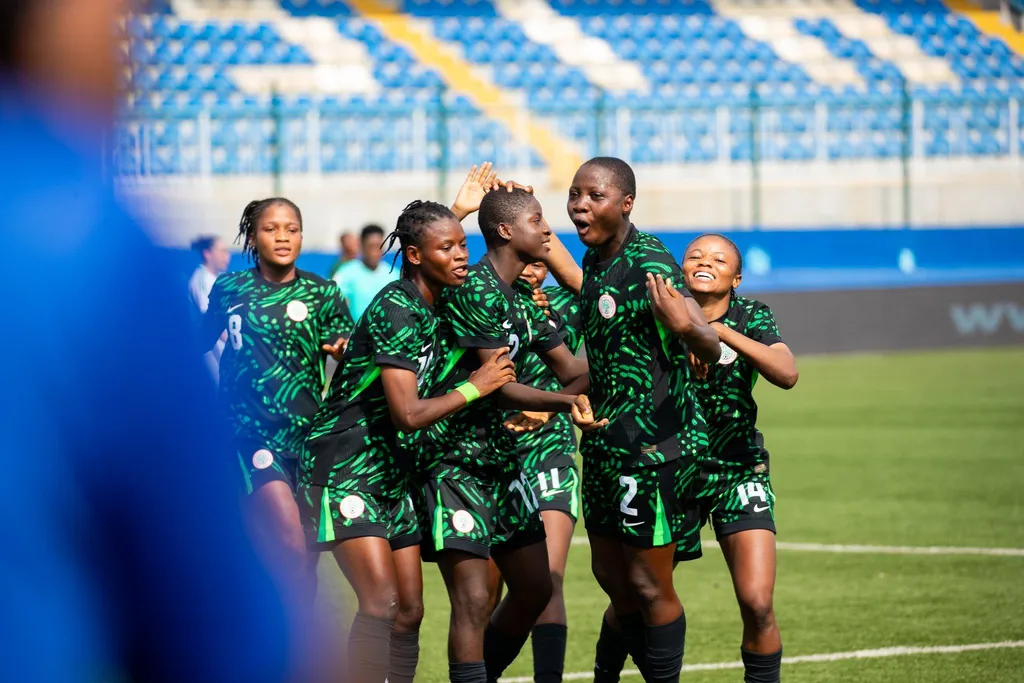
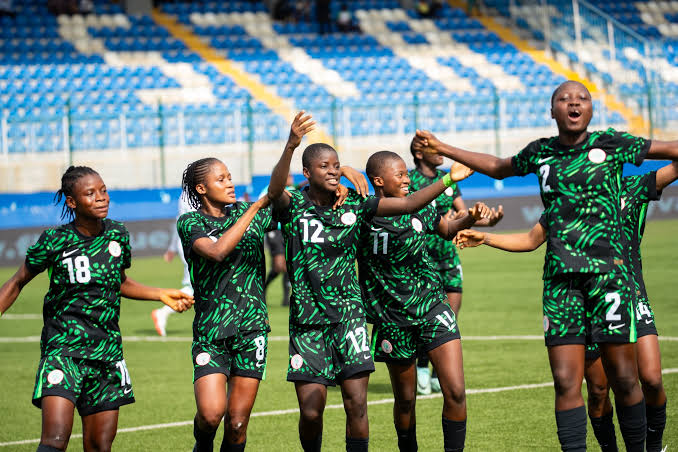
For players like Alessia Russo — whose historic hat-trick for Arsenal this week underlined the quality driving the women's game's growth — and for emerging nations such as Nigeria, whose Flamingos reached the Under-17 World Cup quarter-finals this week, the money matters at every level. Bigger prize funds filter down into salaries, facilities and youth development, and a profitable Brazil 2027 would strengthen the argument that the women's tournament is no longer a cost to be carried but a business in its own right.
England, the European champions and 2023 runners-up, are still trying to qualify for Brazil, with the final round of the European play-offs in December. Ireland, Scotland and Wales are also still in contention — and every one of those squads will be watching the December council meeting closely.
Beyond the Final Whistle: Doubling the prize money is real progress — $220m is more than seven times the 2019 pot — but FIFA should not dress this up as equality delivered. Infantino set the parity target himself, FIFA is sitting on billions in reserves, and by its own projection the women's tournament is about to turn a profit. The players were right to ask why the gap remains, and the December council owes them a clear path — with dates — to closing it, not just assurances on a phone call.
Will FIFA ever deliver full prize-money parity between the men's and women's World Cups — and should Brazil 2027 have been the moment it happened? Let us know what you think in the comments.