FIFA’s new 16-day international window was designed to reduce interruptions to the club season. But with four matches squeezed into one block, injuries mounting and leading national-team coaches raising concerns, football is already debating whether the solution has created a different problem.
Date: October 4, 2026
By Abiodun Adewale Adeniyi | Founder & Editor, Beyond the Final Whistle
Football’s new international calendar was supposed to solve a familiar problem.
For years, club managers and supporters complained about the stop-start nature of the early European season.
The domestic campaign would begin, pause for international football in September, restart for a few weeks and then stop again in October.
FIFA’s solution was straightforward: combine the two international windows.
Beginning in 2026, September and October have been merged into a single 16-day period in which national teams can play as many as four matches.
On paper, there is logic behind the change.
In practice, however, the first extended window has produced a very different debate.
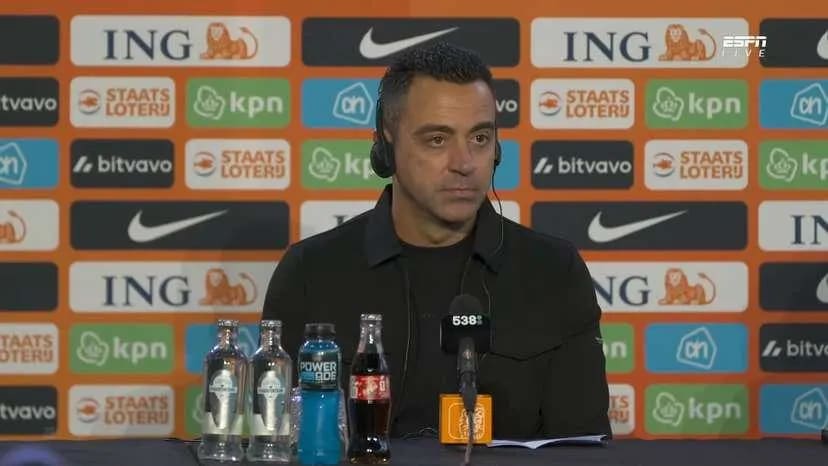
Netherlands coach Xavi Hernández has joined England manager Thomas Tuchel, Germany coach Jürgen Klopp and Spain boss Luis de la Fuente in raising concerns about the demands being placed on players, according to Reuters’ report on the growing criticism of the new international window.
And as injuries accumulate across international squads, the conversation is becoming bigger than whether supporters simply prefer one long break or two shorter ones.
The real question is now much more serious:
Has football concentrated too much physical demand into one international window?
What Exactly Did FIFA Change?
The first important point is that FIFA has not simply created an additional international break.
It has reorganised two existing ones.
Under the previous structure, national teams generally had a nine-day window in September and another nine-day window in October, with two matches available during each period.
Under FIFA’s new men’s international match calendar, those periods have been consolidated into one 16-day window.
According to FIFA’s official International Match Calendar, the 2026 window runs from September 21 to October 6, with national teams permitted to play up to four matches.
The change forms part of the wider international calendar FIFA has established through 2030.
For supporters wondering why club football has disappeared for so long, Beyond the Final Whistle previously explained the structure in detail in our guide, “Why Is the International Break So Long? Everything Football Fans Need to Know About FIFA’s New 16-Day Window.”
The principle behind the change is understandable.
Instead of club football stopping in September, restarting and then stopping again only weeks later, the interruptions have been consolidated.
Once players return to their clubs in October, there will be no second October international break.
But removing one interruption has created another challenge.
Some players are now being asked to prepare for four international matches inside one camp.
And several leading coaches are questioning whether that concentration of games is sensible.
Xavi Hernández: The Schedule Is Putting Players at Risk
The latest criticism has come from Netherlands coach Xavi Hernández.
The Dutch have been hit particularly hard during the current Nations League window.
Brian Brobbey, Lutsharel Geertruida, Cody Gakpo and Jan Paul van Hecke have all suffered injuries during the Netherlands’ recent matches and returned to their clubs, according to Reuters’ report detailing Xavi’s concerns over the extended international schedule.
Gakpo’s case illustrates the problem clearly.
The Liverpool forward injured his ankle during the Netherlands’ victory over Serbia in Belgrade and was subsequently ruled out of the remaining matches in the window.
With the Netherlands preparing for another meeting with Serbia, Xavi publicly questioned the demands of the new format.
His argument was not simply that four matches are too many.
It was that matches cannot be viewed in isolation.
Between those games are training sessions, tactical preparation, recovery work and travel.
For international players based abroad, that travel can be considerable.
A footballer’s workload therefore cannot be measured simply by counting 90-minute appearances.
The physical demands begin long before kick-off and continue after the final whistle.
That is particularly important this season because the extended international period has arrived only months after the 2026 World Cup.
Many elite players had shortened summer recovery periods before returning almost immediately to club football.
Now they are inside another demanding international cycle.
Thomas Tuchel Sees Another Problem: Club and Country Are Different Environments
England manager Thomas Tuchel has also highlighted the difficulties created by the extended window.
His concern introduces another element that is often ignored when discussions focus entirely on the number of matches.
International football is not simply club football in a different shirt.
Players leave one tactical system and enter another.
Training intensity can change.
Their positional responsibilities can change.
Recovery methods may differ.
Medical teams change.
Even the style of football can change dramatically.
A midfielder playing one role for Arsenal, Chelsea, Liverpool, Real Madrid or Bayern Munich may be asked to perform a completely different tactical function for his national team days later.
Tuchel has argued that moving between those environments already creates risks, with Reuters reporting his concerns alongside those raised by other leading national-team coaches.
Extending the international camp potentially magnifies them.
England have experienced their own fitness problems during this period.
Cole Palmer, Declan Rice, Marcus Rashford, Kobbie Mainoo and Tino Livramento were among the players who withdrew from the squad before England began their Nations League schedule.
Not every injury can be blamed on FIFA’s new international format.
That distinction is important.
Football injuries existed before the 16-day window and will continue to exist regardless of how international matches are organised.
But the withdrawals illustrate the wider issue.
Elite players are arriving at international camps already carrying the accumulated physical demands of club football.
Jürgen Klopp Took a Completely Different Approach
Germany coach Jürgen Klopp appears to have recognised the unusual demands before the window even began.
Rather than selecting one conventional squad and asking the same group to navigate the entire international period, Klopp called up 44 players across two separate squads, an unusual strategy highlighted in Reuters’ examination of how national-team coaches are responding to the new window.
It was an extraordinary number for a senior national team.
But it also demonstrated the management problem created by four matches inside one camp.
Klopp effectively attempted to distribute the workload.
That approach has obvious advantages.
More players receive international experience.
Key individuals can be protected.
Training intensity can potentially remain higher because players are not expected to survive four consecutive matches.
But there is also a footballing cost.
International managers already have significantly less time with their players than club coaches.
Constantly changing personnel makes it even harder to establish combinations, tactical familiarity and a consistent starting XI.
That creates an uncomfortable contradiction.
The extended window theoretically gives coaches more continuous time with their players.
But if the physical demands force managers to rotate heavily or divide squads, some of that tactical benefit disappears.
Luis de la Fuente Preferred the Old System
Spain coach Luis de la Fuente has been even clearer about his preference.
Despite managing one of the deepest national-team squads in world football, the World Cup-winning coach has indicated that he preferred the previous international structure because players had greater opportunities for recovery, according to Reuters.
That is significant.
Spain arguably have more ability than most countries to rotate without dramatically reducing the quality of their team.
Yet even their manager is questioning whether the new format takes sufficient care of players.
Spain have also experienced fitness issues during this international period.
Ferran Torres was recently released from the squad because of persistent discomfort in his left ankle.
His withdrawal opened the door for Carlos Espí to receive his first senior call-up.
Beyond the Final Whistle covered Torres’ withdrawal and Espí’s opportunity in our recent Spain injury update.
Again, Torres’ problem should not simply be presented as proof that the new FIFA window caused an injury.
Football does not work that way.
But every additional fitness problem adds to the broader conversation about how much football elite players are being asked to absorb.
This Problem Is Bigger Than International Football
The debate surrounding the September–October window cannot be separated from football’s wider calendar.
Players’ union FIFPRO has repeatedly raised concerns about elite-player workload.
Earlier this year, FIFPRO’s analysis of the growing player-workload problem highlighted how some leading players could exceed 70 appearances during the 2025/26 season when club and international competitions were combined.
The concern is not merely the number of games.
Recovery matters.
Travel matters.
Off-season rest matters.
Pre-season preparation matters.
Long sequences of matches without adequate recovery matter.
The 2026 World Cup added another layer.
Players representing clubs involved deep into domestic leagues and European competitions finished demanding club seasons before preparing for an expanded World Cup running into July.
Many then had limited time before returning for the 2026/27 campaign.
The current international window arrived in September.
That is why the debate cannot simply be reduced to four Nations League games.
The four matches are part of a much larger workload.
The PFA Says Football Is Reaching a Physical Limit
The Professional Footballers’ Association has also repeatedly warned about the demands of football’s expanding calendar.
The number of players withdrawing from national squads has intensified that discussion.
The central player-welfare argument is straightforward: footballers may want to represent their countries, but physical limits eventually matter more than motivation.
That distinction is important.
International withdrawals are sometimes framed as players prioritising their clubs or showing less commitment to their countries.
The workload argument suggests something different.
A player can desperately want to represent his country and still be physically incapable of doing so safely.
Football’s authorities therefore face a difficult balance.
Supporters want the best players on the pitch.
Clubs pay enormous salaries and want their investments protected.
National teams need their strongest squads for meaningful competitive matches.
Broadcasters and sponsors want major fixtures.
And players sit at the centre of all those competing interests.
But FIFA’s Idea Is Not Without Logic
It would be too easy to look at the injuries and conclude that the old calendar was automatically better.
There is a genuine argument in favour of FIFA’s new structure.
Under the previous system, international players could leave their clubs in September, travel across Europe—or sometimes across continents—play two matches, return to their clubs and then repeat almost the entire process several weeks later.
That meant two separate disruptions.
Two periods of international travel.
Two transitions between club and national-team environments.
Two interruptions to domestic tactical preparation.
The new system reduces those transitions.
Players leave once.
National-team coaches receive a longer uninterrupted period with their squads.
Club competitions pause once rather than twice.
And when domestic football returns in October, teams can build momentum without another international break arriving almost immediately.
When approving its international match calendars through 2030, FIFA said the schedule was designed around the needs of international football while also addressing player welfare and the wider football calendar.
So the idea itself is not irrational.
The question is whether four matches during the consolidated period undermines some of those intended benefits.
One Long Break or Two Short Ones?
That may ultimately be the most important debate.
Imagine two alternatives.
Option A: Players leave their clubs twice, play two international matches each time and receive a short club period between the windows.
Option B: Players leave once, remain with their national teams for 16 days and potentially play four matches during the same camp.
Neither system is perfect.
Option A creates more travel and more disruption to the club season.
Option B creates a longer continuous workload and potentially less recovery between international matches.
Different players will also experience the two systems differently.
A European player representing a country close to his club may face relatively modest travel demands.
A South American, African or Asian international playing club football in Europe can travel thousands of miles during international periods.
There is therefore no universal workload experience.
That makes calendar reform considerably more complicated than simply reducing the number of international breaks.
The Club-versus-Country Problem Is Getting Harder
There is another consequence that could become increasingly important.
Relationships between clubs and national teams may become more difficult.
A Premier League manager preparing for a major fixture immediately after the international break will naturally want his players returned healthy.
A national-team coach fighting for Nations League points, qualification or tournament preparation wants to select his strongest side.
Both positions are understandable.
But what happens when a player has already played three matches and the national team has a fourth?
Should he start?
Should the national coach rotate him?
Should his club be allowed to request reduced minutes?
Who ultimately decides when a player needs rest?
Those questions are becoming more important as football’s calendar expands.
And there is no simple answer.
Allow clubs too much influence and international football risks becoming secondary.
Ignore clubs completely and national associations risk damaging relationships with the organisations employing the players throughout most of the year.
The player remains caught between the two.
Injuries Should Not Become the Only Measure
There is also a danger in judging the success or failure of the new calendar purely through injuries.
An injury can have multiple causes.
Contact injuries can happen in any match.
Muscle problems can develop from previous workload.
Some players arrive at international camps already carrying issues.
Others may become injured despite being carefully managed.
A more meaningful assessment of FIFA’s new system should therefore consider several factors over multiple seasons:
How many minutes are leading internationals playing?
How much recovery time exists between appearances?
How often are players travelling?
Are muscular injuries increasing?
Are clubs receiving players back in worse physical condition?
Are national-team performances declining late in the window?
And are players themselves reporting excessive fatigue?
Those questions require data, not assumptions.
One international window cannot provide every answer.
But the first experiment is already producing enough concern that the debate cannot be dismissed.
This Format Is Scheduled to Continue Through 2030
Perhaps the most important point is that this is not designed as a one-season experiment.
FIFA’s official international match calendar retains the combined late-September/early-October 16-day, four-match window through 2030.
The November, March and June windows return to the more familiar format of two matches across approximately nine days.
That means football has several years to evaluate whether the consolidated autumn window works.
It also means the concerns being raised now matter.
If coaches, clubs, players and medical experts begin identifying consistent problems, there will inevitably be pressure for adjustments.
That could mean stronger recovery requirements.
It could mean changes to how competitions schedule the four match dates.
It could encourage larger international squads.
Or football could ultimately conclude that consolidating the windows was the correct decision and that teams simply need to learn how to manage the new format.
The first year was always going to provide lessons.
We are beginning to see them.
Football Cannot Keep Solving Calendar Problems by Asking Players to Absorb More
The most revealing aspect of this debate is not whether FIFA, UEFA, clubs or national-team coaches are individually right.
It is that almost every part of elite football wants more.
Clubs want expanded commercial opportunities.
International federations want meaningful national-team football.
Confederations want competitive tournaments.
Broadcasters want premium matches.
Supporters want to watch the best players.
But there is one resource that cannot be expanded indefinitely:
the footballer’s body.
FIFPRO’s player workload monitoring programme has increasingly focused attention on match congestion, recovery time, travel and the amount of genuine off-season rest available to professional players.
Those discussions may prove increasingly important.
Football’s commercial calendar can be redesigned.
Competitions can be expanded.
International windows can be moved.
But recovery cannot simply be negotiated away.
The challenge for football is therefore not choosing between club football and international football.
Both matter.
The challenge is building a calendar in which the best players can consistently perform in both.
The new 16-day window was intended to be part of that solution.
After its first major test, some of football’s most prominent coaches are already asking whether it needs another look.
Beyond the Final Whistle, FIFA’s new international window was created to solve a genuine problem: two separate interruptions to the club season within a matter of weeks. Combining them into one 16-day period has clear advantages, including fewer transitions and less repeated travel. But four international matches, limited recovery and an already overloaded elite-football calendar have created a different concern. Xavi Hernández, Thomas Tuchel, Jürgen Klopp and Luis de la Fuente may approach the problem differently, but their concerns point toward the same question football can no longer avoid: how much can the modern player realistically be asked to absorb?
Would you keep FIFA’s new 16-day international window, reduce it to fewer matches, or return to separate September and October breaks? Join the conversation on Beyond the Final Whistle.