
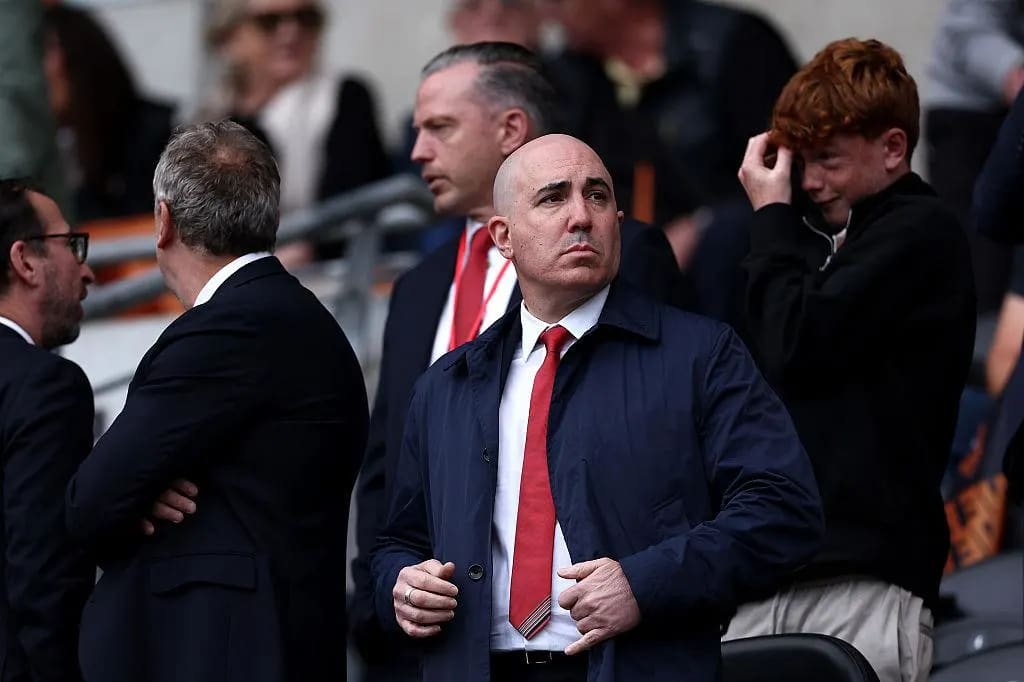
Manchester United have reported record annual revenue of £677.6 million for the 2025/26 financial year, yet still finished the period with a £43 million net loss. Beyond the headline numbers, the accounts reveal a club improving operationally while still carrying significant financial pressures — just as Champions League football returns to Old Trafford.
Category: Premier League
Date: September 23, 2026
By Abiodun Adewale Adeniyi | Founder & Editor, Beyond the Final Whistle
Manchester United have produced one of the most intriguing sets of financial results in European football: record revenue alongside another significant annual loss.
The club generated £677.6 million in revenue during the financial year ending June 30, 2026, despite spending the season without European football. Yet United still finished the year with a £43 million net loss, compared with £33 million the previous year.
The initial development appeared through our football-news monitoring, where a report highlighted the increase in United's annual loss and decline in commercial revenue. But Manchester United's official financial results reveal a considerably more complicated picture.
How can one of football's biggest clubs generate more revenue than ever before and still lose £43 million?
The answer lies deeper in the accounts.
Manchester United Generate Record Revenue Without European Football
Perhaps the most striking aspect of United's results is that the revenue record arrived during a season in which the club had no UEFA competition.
According to Manchester United's official financial reporting, total revenue reached £677.6 million, up 1.7% from £666.5 million the previous year.
The figures break down as follows:
Commercial revenue: £317.3m, down 4.8%
Broadcasting revenue: £206.8m, up 19.6%
Matchday revenue: £153.5m, down 4.2%
Total revenue: £677.6m, up 1.7%
Adjusted EBITDA: £216.4m, up 18.4%
Net loss: £43m, compared with £33m the previous year
The increase in broadcasting income is particularly important.
United's improved Premier League performance helped compensate for the absence of European income, while the club's enormous global commercial operation continued generating more than £300 million.
The results demonstrate something that has been true about Manchester United for decades: even when performances on the pitch fluctuate, the club remains one of football's most powerful revenue-generating brands.
Why Did Manchester United Still Lose £43m?
Revenue and profit are two very different things.
Manchester United may have generated £677.6 million, but running one of the world's largest football operations comes with enormous costs.
The club also incurred exceptional expenses during another period of managerial and organisational change.
Reporting surrounding the accounts indicates United recorded approximately £8.2 million in exceptional costs connected with Ruben Amorim's departure and restructuring.
Those costs came during another major transition at Old Trafford.
United eventually turned to Michael Carrick, whose impact helped transform the team's league position during the second half of last season.
There are also financing costs and other expenses that affect the final bottom-line result.
And this is where the headline £43 million loss can be misleading if viewed without context.
United Actually Made an Operating Profit
One of the most significant numbers in the accounts received far less attention than the £43 million loss.
Manchester United recorded an operating profit of £22.6 million, compared with an £18.4 million operating loss the previous year.
Adjusted EBITDA also increased substantially to a record £216.4 million.
That suggests the underlying operation of the business improved even though United ultimately remained loss-making after other costs were included.
Operating expenses have also been affected by the cost-reduction programme implemented by the club.
The financial picture therefore cannot simply be reduced to:
Manchester United lost £43 million.
The more accurate interpretation is that United's underlying business generated record revenue and improved operationally, but significant costs still pushed the club into another overall loss.
Manchester United's Wage Bill Is Falling
One of the clearest signs of United's attempt to control expenditure is the wage bill.
The club's wage costs fell to approximately £302 million, a reduction of around £11.3 million from the previous financial year.
That is significant.
Player salaries represent one of the largest expenses for virtually every major European football club, and United have spent years attempting to build squads capable of challenging for major trophies while carrying some extremely expensive contracts.
Reducing the wage bill without sacrificing competitiveness would therefore represent an important part of the club's financial strategy.
It also becomes increasingly important under the Premier League's financial regulations.
Michael Carrick's Impact Is Now Financial as Well as Sporting
There is another connection between these financial results and a story we recently examined on Beyond the Final Whistle.
Michael Carrick's Manchester United finished third in the Premier League last season, securing qualification for the Champions League.
That achievement has consequences far beyond league position.
Champions League football brings additional broadcasting distributions, matchday revenue, sponsorship exposure and potentially substantial prize money.
Earlier today, we examined a very different side of Carrick's Manchester United in our analysis of why United currently rank bottom of several Premier League high-intensity running metrics.
Those numbers raise questions about United's performances at the beginning of the new campaign.
But Carrick's achievement last season has nevertheless put United in a considerably stronger financial position entering 2026/27.
Champions League qualification could now become one of the biggest drivers of the club's next revenue increase.
Manchester United Expect Revenue to Reach £760m
Perhaps the most important forward-looking figure in the results is United's revenue forecast.
Manchester United expect to generate between £740 million and £760 million in revenue during fiscal 2027.
The club also expects adjusted EBITDA of between £205 million and £225 million.
If United reach the top of that revenue range, they would break their revenue record again — potentially adding more than £80 million compared with the latest financial year.
Champions League participation is a major part of that equation.
European football brings extra income, although it also brings additional expenditure.
More matches can mean performance-related player bonuses, travel expenses and the cost of maintaining a deeper squad capable of competing across multiple competitions.
Champions League qualification therefore does not simply translate into pure profit.
But for a club with Manchester United's commercial scale, returning to Europe's biggest club competition can make an enormous difference.
What Does the £43m Loss Mean for PSR?
Whenever a Premier League club announces a significant financial loss, one question immediately follows:
What does this mean for Profitability and Sustainability Rules?
Under the Premier League's financial framework, the accounting loss reported in annual financial statements is not necessarily identical to the loss used for PSR calculations.
Certain categories of expenditure can receive different treatment when determining compliance.
That means United's £43 million net accounting loss should not automatically be interpreted as a £43 million PSR loss.
There is nothing in these financial results alone establishing that Manchester United have breached the Premier League's financial rules.
Nevertheless, repeated losses increase the importance of controlling expenditure.
United want to strengthen Carrick's squad, compete in the Champions League and Premier League, and simultaneously pursue one of the most ambitious infrastructure projects in world football.
That combination requires enormous financial discipline.
A 100,000-Seat Manchester United Stadium Moves Forward
United's ambitions are not restricted to the pitch.
The club has also continued progressing plans connected with a proposed 100,000-seat stadium.
The latest financial filings include significant spending associated with land for the proposed stadium development.
A stadium of that scale could eventually transform Manchester United's matchday revenues.
Old Trafford already generates enormous income, but a modern 100,000-seat venue incorporating hospitality, commercial facilities and surrounding development could potentially take the club's earning power to another level.
However, building one of the world's largest football stadiums would also create major financing requirements.
That makes United's ability to generate sustainable cash from their football operation even more important.
Record Revenue Does Not Automatically Mean Financial Health
There is an important lesson in Manchester United's accounts.
Football supporters often judge financial strength by revenue.
But revenue tells only part of the story.
Manchester United generated a record £677.6 million.
They also recorded record adjusted EBITDA.
Their operating position improved.
Their wage bill fell.
Champions League football returned.
Yet the club still recorded a £43 million net loss.
Those figures can all be true simultaneously.
The challenge for United is therefore no longer simply generating money.
Manchester United already know how to generate enormous amounts of money.
The challenge is converting that revenue into sustainable profitability while maintaining a squad capable of competing for major trophies.
The Football Results Still Matter Most
There is also an unavoidable connection between financial performance and what happens on the pitch.
Champions League qualification dramatically changes the revenue equation.
Missing the competition can remove tens of millions of pounds in potential income.
That makes United's current sporting trajectory especially important.
Our recent analysis of Manchester United's running statistics under Michael Carrick showed that United rank at the bottom of several Premier League high-intensity metrics during the opening stages of the season.
If those performances improve and United remain among England's Champions League clubs, the financial recovery described in these accounts becomes considerably easier to sustain.
If they fall out of Europe's elite competition again, another major revenue stream disappears.
That is why United's sporting and financial rebuilds can no longer be viewed separately.
What Manchester United's Numbers Really Tell Us
The headline figure — £43 million lost — sounds alarming.
But the wider numbers tell a more nuanced story.
Manchester United generated record revenue.
Adjusted EBITDA reached record levels.
The club moved from an operating loss to an operating profit.
The wage bill declined.
Champions League football returned.
And management believes annual revenue could now climb as high as £760 million.
At the same time, United remain loss-making at the bottom line and continue carrying significant financial obligations.
The club must also balance squad investment with ambitious infrastructure plans.
Manchester United therefore appear to be moving in a stronger operational direction, but the job is far from finished.
The next stage is converting that commercial strength into something United have struggled to achieve consistently in recent years:
sustainable financial performance accompanied by sustainable success on the football pitch.
Beyond the Final Whistle, Manchester United's £43 million loss should not be viewed in isolation. Record revenue, improving operating performance, lower wage costs and Champions League qualification provide evidence of progress, but United still face the harder challenge of converting enormous revenues into sustainable bottom-line results. Ultimately, their financial revival and football revival are increasingly dependent on one another.
Can Manchester United turn record revenues and Champions League football into sustained financial and sporting success, or will continued losses remain a concern at Old Trafford? Join the conversation on Beyond the Final Whistle


