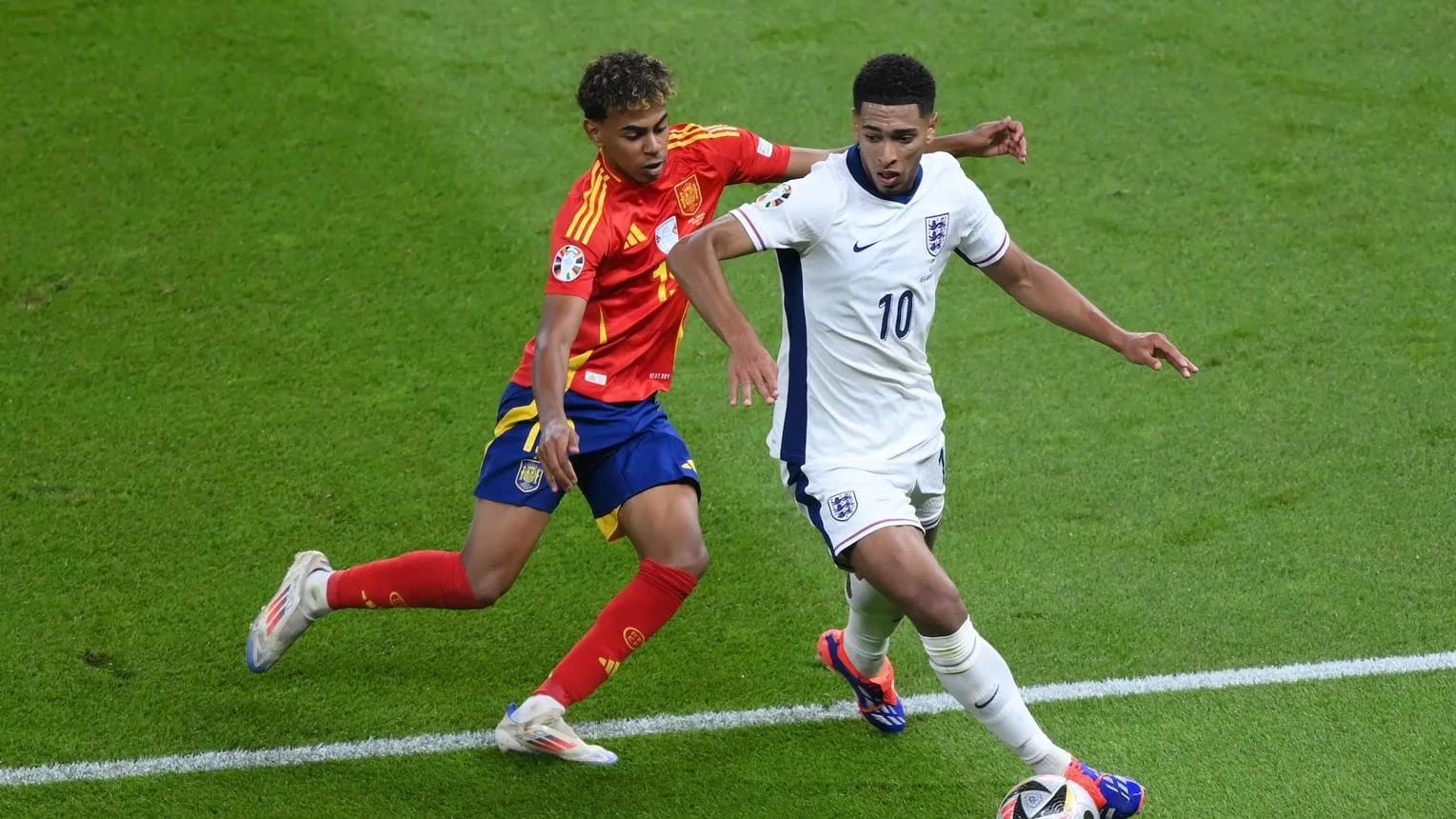
England twice showed they could hurt Spain but ultimately couldn't contain the world champions as second-half goals from Álex Baena and Mikel Oyarzabal completed a 3–2 comeback victory at Wembley in the UEFA Nations League.
Date: September 26, 2026
By Abiodun Adewale Adeniyi | Founder & Editor, Beyond the Final Whistle
England wanted a benchmark.
Spain gave them one.
Thomas Tuchel's side began their 2026/27 UEFA Nations League campaign with a 3–2 defeat to Spain at Wembley, in a match that demonstrated both England's attacking potential and the problems they still need to solve against elite opposition.
The official UEFA match page had framed the fixture as a heavyweight reunion following Spain's victory over England in the Euro 2024 final. Spain arrived in London as reigning world and European champions, while England were returning to League A after winning promotion in the previous Nations League campaign.
By full-time, Spain had once again come out on top.
But the journey to that result was anything but straightforward.
Yamal Gives England the Worst Possible Start
England's plan was disrupted almost immediately.
Lamine Yamal struck in the second minute, giving Spain an early advantage and forcing England to chase the game almost from the opening whistle.
Against a team as comfortable controlling possession as Spain, conceding first can be disastrous.
England, however, responded impressively.
Rather than allowing the world champions to dictate everything that followed, Tuchel's team gradually worked themselves back into the contest.
And within four first-half minutes, Wembley had been transformed.
Gordon and Kane Turn the Match Around
Anthony Gordon equalised in the 36th minute, rewarding England for refusing to retreat after Spain's early breakthrough.
Then came Harry Kane.
Four minutes later, the England captain scored to make it 2–1, completing a remarkable first-half turnaround.
Kane entered the fixture in outstanding form. UEFA highlighted before the match that the striker had recently become the fastest player to reach 100 Bundesliga goals.
Against Spain, he again demonstrated why England remain so dependent on him in the biggest matches.
England had gone from trailing after two minutes to leading the world champions.
For a team missing several important players, it was exactly the response Tuchel would have wanted.
As we explained in our England vs Spain pre-match analysis, England entered the game without Declan Rice, Cole Palmer, Marcus Rashford, Kobbie Mainoo and Tino Livramento.
Those withdrawals were confirmed before the match, with James Garner and Morgan Gibbs-White brought into the squad as replacements.
England had nevertheless demonstrated that they could hurt Spain.
The problem was sustaining it.
Spain Take Back Control
The second half belonged to the visitors.
Spain didn't panic after falling behind.
That may have been the most revealing part of the match.
The world champions continued trusting their structure, moving England around and searching for the spaces that would eventually appear.
In the 60th minute, Álex Baena equalised.
Suddenly England's first-half comeback had been erased.
And Spain weren't finished.
Oyarzabal Haunts England Again
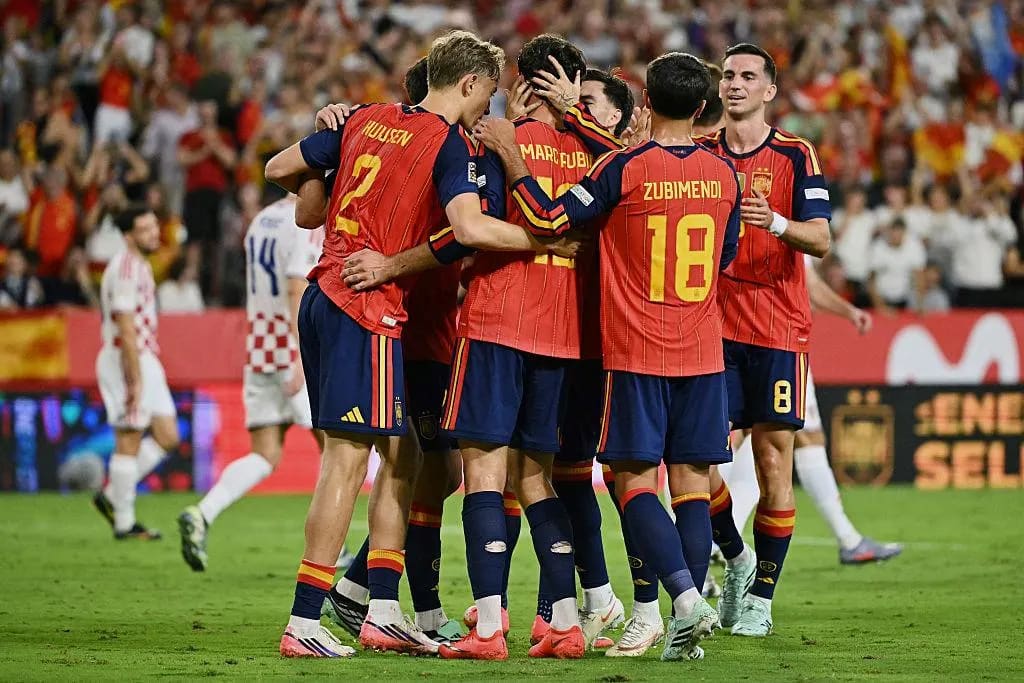
Fourteen minutes after Baena's equaliser, Mikel Oyarzabal scored Spain's third.
The name will be painfully familiar to England supporters.
Oyarzabal was the player who scored Spain's late winner when these countries met in the Euro 2024 final in Berlin, a match Spain won 2–1. UEFA highlighted that previous meeting when previewing Saturday's Nations League encounter.
More than two years later, he had hurt England again.
This time his goal completed Spain's comeback at Wembley.
England had led 2–1.
Now they trailed 3–2.
And they couldn't find another response.
England's Midfield Problem Was Always Going to Matter
One of the biggest questions before kickoff concerned the absence of Declan Rice.
Against many opponents, England have enough individual quality to compensate.
Spain are different.
Their midfield is designed to control matches through positioning, technical security and constant movement.
Without Rice, Tuchel had to construct a midfield capable of competing with that while also providing enough attacking support for Kane.
England managed it effectively during periods of the first half.
But the second half demonstrated why controlling Spain for 90 minutes is such a difficult assignment.
Once the visitors established sustained possession and England began defending for longer periods, the pressure increased.
Baena's equaliser changed the momentum.
Oyarzabal's winner punished England for failing to regain it.
Bellingham Cannot Solve Everything
Jude Bellingham was always going to carry enormous responsibility in a midfield missing Rice and Mainoo.
But asking Bellingham to contribute defensively, progress possession and still arrive in dangerous attacking positions presents an obvious problem.
Move him deeper and England lose some of his threat around the penalty area.
Push him forward and somebody else has to control the spaces behind him.
This is where Rice's absence was particularly important.
It isn't simply that England were missing a talented midfielder.
They were missing the player whose presence allows others to perform their preferred roles.
That distinction matters.
England's Attack Should Still Encourage Tuchel
There is another side to the result.
England scored twice against the reigning world and European champions.
They recovered from conceding in the second minute.
And they went into the interval ahead.
Those aren't insignificant achievements.
Gordon provided the directness England needed, while Kane once again demonstrated his reliability in front of goal.
England therefore shouldn't interpret the result as evidence that they cannot compete with Spain.
For substantial periods, they did.
The more useful question is whether they can maintain that level for an entire match.
At Wembley, they couldn't.
Spain Show Why They Are World Champions
Spain's response to falling behind was perhaps the clearest difference between the teams.
There was no dramatic tactical abandonment.
No panic.
No desperation.
They continued playing.
That composure is one of the characteristics that separates excellent teams from championship teams.
Spain came into Wembley on a five-match winning run and with both the European Championship and World Cup titles behind them. UEFA's pre-match statistics also showed that Spain had won six of the previous ten meetings between the countries since the turn of the millennium.
England gave them a serious examination.
Spain still found the answer.
Tuchel Got the Test He Asked For
Before the Nations League campaign began, Tuchel made his intentions clear.
England wanted difficult opposition.
UEFA quoted the England manager saying his team wanted a competitive group because they wanted to play against the best and see where they are.
Now he has part of the answer.
England can threaten the best.
But they are not yet controlling matches against the best.
That's an important distinction.
The scoreline shouldn't cause panic, particularly considering the players England were missing.
But neither should the two goals disguise the defensive and midfield issues Spain exposed after half-time.
What Comes Next for England?
England don't have long to dwell on the defeat.
Their next Nations League match comes against Czechia in Prague on September 29, followed by an away match against Croatia on October 3 and another meeting with Czechia at Wembley three days later.
The official UEFA Nations League schedule confirms that England will then face Croatia and Spain again during the November international window.
That final fixture against Spain in Madrid could become particularly interesting.
By then, Tuchel may have Rice, Palmer, Rashford and others available again.
And England will have the lessons from Wembley.
Defeat — But Also a Warning About What England Must Improve
This wasn't a disastrous England performance.
It was a revealing one.
England demonstrated resilience after Yamal's early goal.
Gordon and Kane showed that Spain can be attacked.
For a period, Tuchel's team had the world champions chasing the game.
But Spain's second-half response exposed the remaining gap.
Elite international football isn't simply about producing excellent periods.
It is about controlling difficult moments.
Spain did that better.
England didn't.
And that is where Tuchel's work continues.
Beyond the Final Whistle, England's 3–2 defeat should be viewed as both encouragement and warning. The Three Lions proved they possess enough attacking quality to trouble the world champions, even with several important players missing. But Spain's second-half comeback showed that competing with the world's best for 45 minutes is different from controlling them for 90. Tuchel now has a much clearer picture of what England must improve.
Did England's defeat expose a genuine gap between the Three Lions and Spain, or would the return of Rice, Palmer and England's other missing players change the balance? Join the conversation on Beyond the Final Whistle.