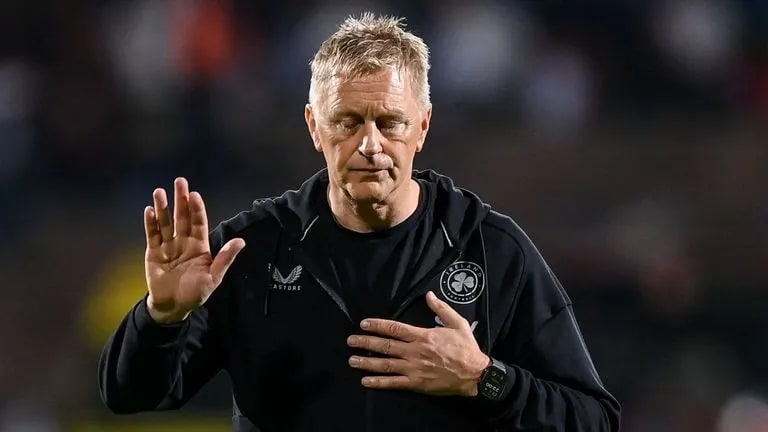
Jürgen Klopp’s first home match as Germany head coach ended in disappointment as Dimitrios Kourbelis scored the decisive goal in Greece’s 1–0 Nations League victory in Augsburg. Two matches into the Klopp era, Germany are still searching for their first win — and Greece may have exposed the first major tactical problem the new coach must solve.
Category: International Football / Nations League
By Abiodun Adewale Adeniyi | Founder & Editor, Beyond the Final Whistle
September 27, 2026
Jürgen Klopp walked into the WWK Arena hoping his first home match as Germany head coach would deliver the first victory of his new era.
Instead, Greece delivered his first defeat.

Germany controlled possession for long periods but struggled to transform that control into enough clear opportunities.
Then came the decisive moment.
Dimitrios Kourbelis scored in the 74th minute, his deflected effort beating Alexander Nübel and securing a 1–0 victory for Greece.
Klopp has therefore opened his Germany reign with a 1–1 draw against the Netherlands followed by a 1–0 defeat to Greece.
We analysed the beginning of this new era when Klopp faced Xavi’s Netherlands in Germany’s opening Nations League match:
https://www.beyondthefinalwhistle.com/netherlands-germany-klopp-xavi-nations-league
Two matches.
One point.
No victory.
But the bigger concern isn't simply the results.
It's what Greece exposed tactically.
Klopp Makes Five Changes for His Home Debut
Klopp made five changes from the team that started against the Netherlands.
Alexander Nübel replaced Marc-André ter Stegen in goal, while Yann Aurel Bisseck, Josha Vagnoman, Younes Ebnoutalib and debutant Bambasé Conté were introduced into the starting XI.
Germany XI: Nübel; Bisseck, Tah, Vagnoman, Brown; Kimmich, Nmecha; Schade, Conté, Adeyemi; Ebnoutalib.
The rotation formed part of Klopp's wider attempt to assess Germany's options during the early stages of his tenure.
But there is an obvious trade-off.
Germany are trying to learn the principles of a new manager while that manager is simultaneously experimenting with personnel.
Against Greece, those growing pains became obvious.
Greece’s Deep Block Frustrates Germany
Greece's strategy was disciplined and effective.
When Germany had possession, the visitors made the pitch smaller.
They dropped deeper.
They protected central areas.
And they waited for Germany to make mistakes.
Germany had the ball.
Greece had the structure.
Karim Adeyemi produced some of Germany's most threatening moments whenever space briefly appeared.
In the 27th minute, Germany cleared a Greek free-kick and Adeyemi suddenly had room to accelerate towards goal, but his effort went over.
Five minutes later, he threatened again and forced Konstantinos Tzolakis into a save.
Those moments revealed something important.
Germany looked dangerous when they could attack space.
They looked considerably less convincing when asked to dismantle an organised defence.
Why Klopp’s Pressing Philosophy Isn’t Enough
Klopp's football has always been associated with intensity.
Press aggressively.
Recover possession quickly.
Attack before the opposition can reorganise.
Those principles helped define his Borussia Dortmund and Liverpool teams.
Beyond the Final Whistle has previously examined those ideas in our detailed analysis of Liverpool's pressing tactics:
https://www.beyondthefinalwhistle.com/liverpool-pressing-tactics
But Greece presented Klopp with the opposite problem.
What happens when the opposition refuses to give Germany an open game?
Greece weren't interested in exchanging attacks.
They stayed compact.
They protected the middle.
They waited.
Germany therefore needed more than pressing.
They needed quicker ball circulation, intelligent movement between the lines, third-man runs and combinations around the penalty area capable of pulling Greece's defensive structure apart.
Those relationships can take months to perfect at club level.
International managers sometimes have only days.
That could become one of Klopp's biggest challenges.
Germany Increase the Pressure
Germany returned after half-time with greater urgency.
Conté tested Tzolakis before Ebnoutalib threatened as Germany attempted to increase the tempo.
Joshua Kimmich then produced one of Germany's better opportunities from a free-kick, but Tzolakis was equal to it.
Klopp wanted more.
Jonathan Burkardt and Florian Wirtz entered in the 65th minute as Germany committed additional attacking quality to the final third.
The pressure increased.
But so did the risk.
And Greece were waiting.
Kourbelis Scores the Goal That Shocks Germany
Germany received their warning in the 67th minute.
A turnover allowed Greece to counter, leaving Fotis Ioannidis with an opportunity against Nübel.
He couldn't take it.
Germany escaped.
Seven minutes later, they weren't so fortunate.
Dimitrios Kourbelis struck in the 74th minute, with his deflected effort beating Nübel and giving Greece the lead.
Germany 0–1 Greece
Klopp reacted immediately.
Serge Gnabry replaced Adeyemi as Germany committed even more bodies forward.
Bisseck headed wide from a corner before Gnabry threatened from a difficult angle.
Anton Stach and Hennes Behrens were subsequently introduced as Germany desperately searched for an equaliser.
It never arrived.
Germany kept attacking.
Greece kept defending.
And Kourbelis' goal remained the difference.
Klopp Accepts Responsibility
Klopp didn't hide from the disappointing result.


The defeat provided the new Germany coach with his first significant setback.
Germany didn't lack possession.
They lacked solutions.
And that distinction matters.
The hosts could force Greece backwards but struggled to consistently create openings once their opponents settled into a compact defensive shape.
For a manager whose best teams have thrived on speed, movement and controlled chaos, this was a very different challenge.
Greece Exposed Germany’s First Major Tactical Problem
This is where the result becomes more interesting than the scoreline.
Klopp's pressing philosophy is designed to transform defensive actions into attacking opportunities.
Win the ball high.
Attack immediately.
Exploit the opponent before they recover their defensive structure.
But Greece frequently denied Germany that opportunity.
They challenged Germany to play a different type of football.
Suddenly the problem wasn't pressing.
It was invention.
Germany needed players receiving between the lines.
They needed runners dragging defenders away from central areas.
They needed quicker combinations around the penalty area.
And they needed greater patience without allowing that patience to become predictability.
Greece successfully challenged Germany to create rather than counter.
Germany couldn't find the answer.
Klopp Must Adapt His Philosophy to International Football
This could ultimately prove more important than the defeat itself.
At Liverpool, Klopp could spend months developing relationships between players.
Pressing triggers became automatic.
Attacking movements could be rehearsed repeatedly.
Players eventually understood where teammates would move before receiving possession.
International football doesn't provide that luxury.
Klopp needs to translate a sophisticated football philosophy into instructions players can absorb during short international camps.
Germany still need his intensity.
They still need aggressive counter-pressing.
They still need the mentality that became synonymous with Klopp's greatest teams.
But they also need solutions when there is nothing to counter.
Greece showed why.
Two Matches Without a Win — What Comes Next?
Two matches are nowhere near enough to judge Klopp's Germany project.
They are enough, however, to identify the first questions.
The Netherlands and Greece presented two very different tactical tests.
Against an opponent willing to play openly, Germany could press and attack transition spaces.
Greece offered something completely different.
They denied Germany space.
They forced them to construct attacks patiently.
They challenged Klopp's players to create rather than counter.
Germany failed that examination.
That doesn't mean Klopp's system has failed.
It means his Germany project has encountered its first significant tactical problem.
And other international coaches will have noticed.
Klopp now has to find the solution.
Beyond the Final Whistle, Germany's 1–0 defeat to Greece should not define Jürgen Klopp's reign, but it has exposed the first major tactical question of his new job. His trademark pressing can make Germany devastating when matches become open, but international opponents will not always provide those spaces. Klopp must now develop a team capable of breaking down deep defensive blocks without becoming vulnerable when possession is lost.
Can Jürgen Klopp solve Germany's attacking problems and secure his first victory in charge, or will adapting his club-football philosophy to international football take longer than expected? Join the conversation on Beyond the Final Whistle.