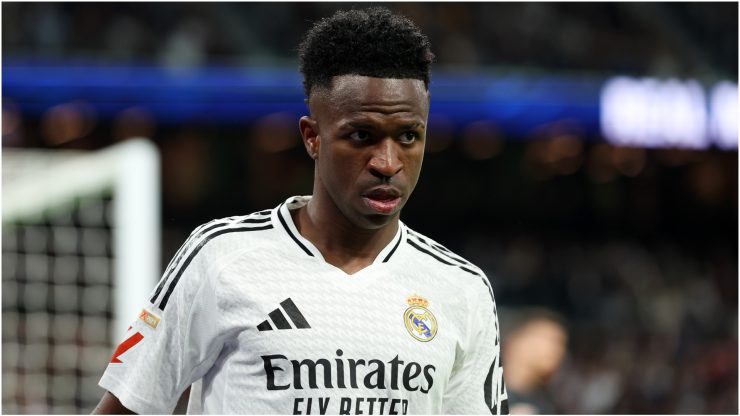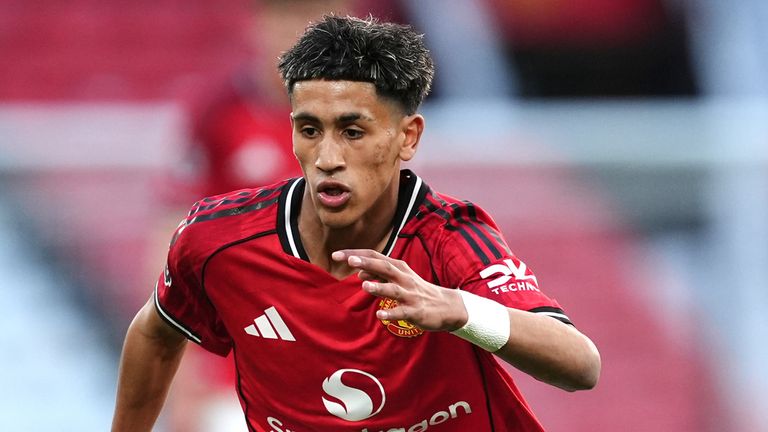
Real Madrid have reached a verbal agreement with JJ Gabriel, the 16-year-old forward who asked to leave Manchester United in September, in one of the most extraordinary academy transfers in recent memory.
The deal, reported by Sky Sports on Wednesday, would take Gabriel to the Santiago Bernabeu in January. He is still registered with United's academy until the end of the season, and Sky Sports News understands there has been no club-to-club contact yet — but the player's side have made their choice, and it is Madrid.
The Times reports the same agreement, describing a deal that is very advanced but not yet finalised and still subject to FIFA regulations because Gabriel is only 16.
A talent United did everything to keep
Gabriel is not an ordinary academy prospect. He was the Premier League's Under-18 player of the season last term despite being only 14 when the season began, played for United's under-18 side at 14, trained with the senior squad in pre-season and featured in the first-team squad photo.
United, by every account, pulled out all the stops. Sky reports he met Sir Alex Ferguson, Ruben Amorim and Michael Carrick as the club tried to show him a clear pathway to the first team. It was not enough.
His camp felt he should have had more first-team involvement. He had been expected to become the club's youngest debutant in a Carabao Cup tie against Brighton in September, but days before that game his camp indicated he wanted to search for first-team football elsewhere. He requested to leave in September, asked to be de-registered immediately, and has not trained with the club since. He is currently in Spain maintaining his fitness.
Why Madrid can sign a 16-year-old from England
The move is possible because of Gabriel's passport. He qualifies for a European passport through both parents — The Times points to Irish and Cypriot heritage in his family — which allows European clubs to sign young players to professional contracts without breaching FIFA's strict rules on the transfer of minors.
That loophole is also why United's leverage is so limited. Sky Sports News reported in October that United will consider legal action if a move materialises, in an attempt to secure greater compensation for a player they developed. Gabriel's camp, Sky says, are not concerned by that threat. Because he would move outside England, any fee is expected to be training compensation rather than a full transfer fee.
Madrid were not the only giants in the race. Barcelona, Paris Saint-Germain and Bayern Munich all showed an interest, and Bayern head coach Vincent Kompany was a fan of the forward — but the German club were reportedly not willing to pay the seven-figure salary his camp were demanding. A big factor in Gabriel leaning towards Madrid, Sky understands, is a belief that there is a clear pathway to the first team at the Bernabeu, where Jose Mourinho's side are in Champions League action tonight with Vinicius Junior back in the starting side.
So what does this mean for United and Madrid?
For United, the sporting loss is obvious, but the wider damage may be institutional. This is a club whose identity is built on promoting its own — the same first team that produced Tuesday's dramatic comeback win over Roma at Old Trafford. Losing the academy's most celebrated talent before he has played a competitive minute, to a loophole and a wage package, raises hard questions about how any English club can protect a 16-year-old star in the modern market.
For Madrid, the calculation is simple. If Gabriel develops as his admirers expect, they have signed a generational prospect for training compensation. If he does not, the cost was minimal. The risk sits almost entirely with the player: he must now break through at the biggest club in the world, where the pathway his camp believe in will be contested by the best young forwards on the planet.
Beyond the Final Whistle: United did not lose JJ Gabriel because they neglected him — they lost him because the system gives a 16-year-old with an EU passport, an ambitious camp and a seven-figure market more power than the club that made him. Madrid have played that system perfectly. Whether Gabriel's camp have played it wisely will only be known when we see if he is playing first-team football at 18 — or still waiting for the pathway he left Old Trafford to find.
Is Gabriel right to swap Manchester United for Real Madrid at 16 — or is this a move he will regret? Let us know in the comments.