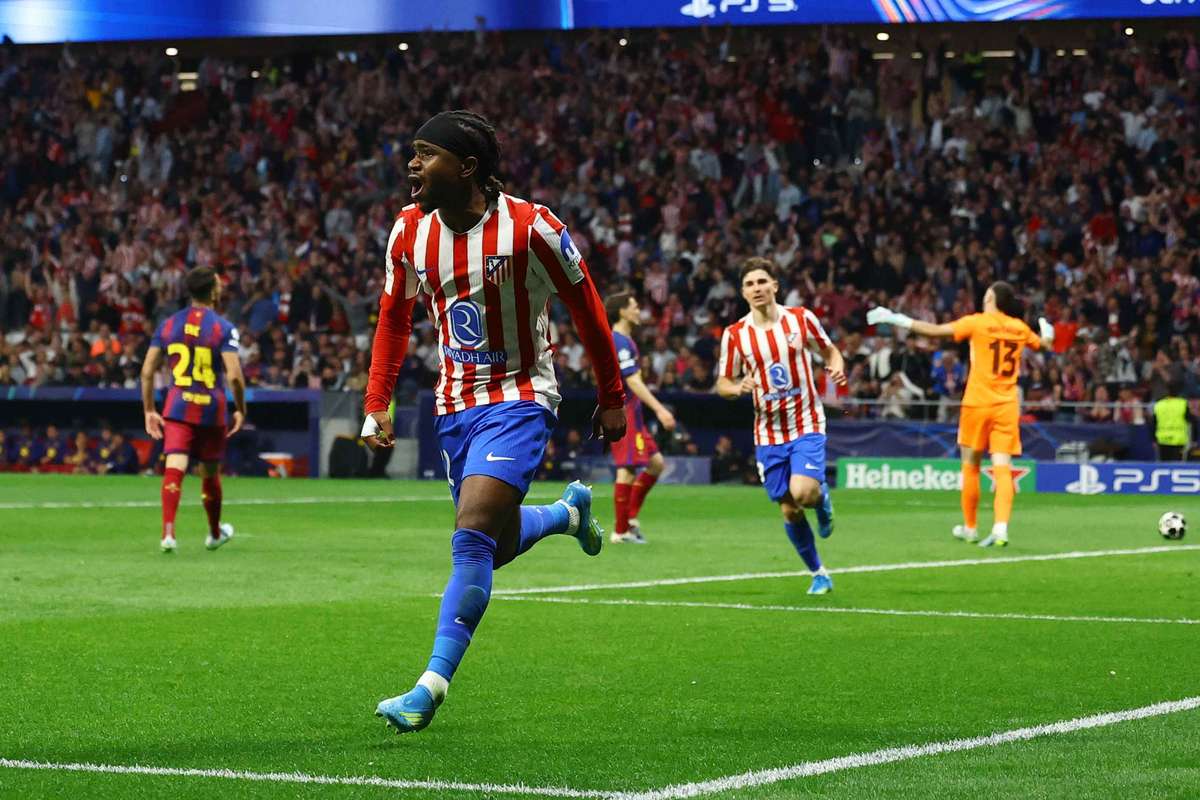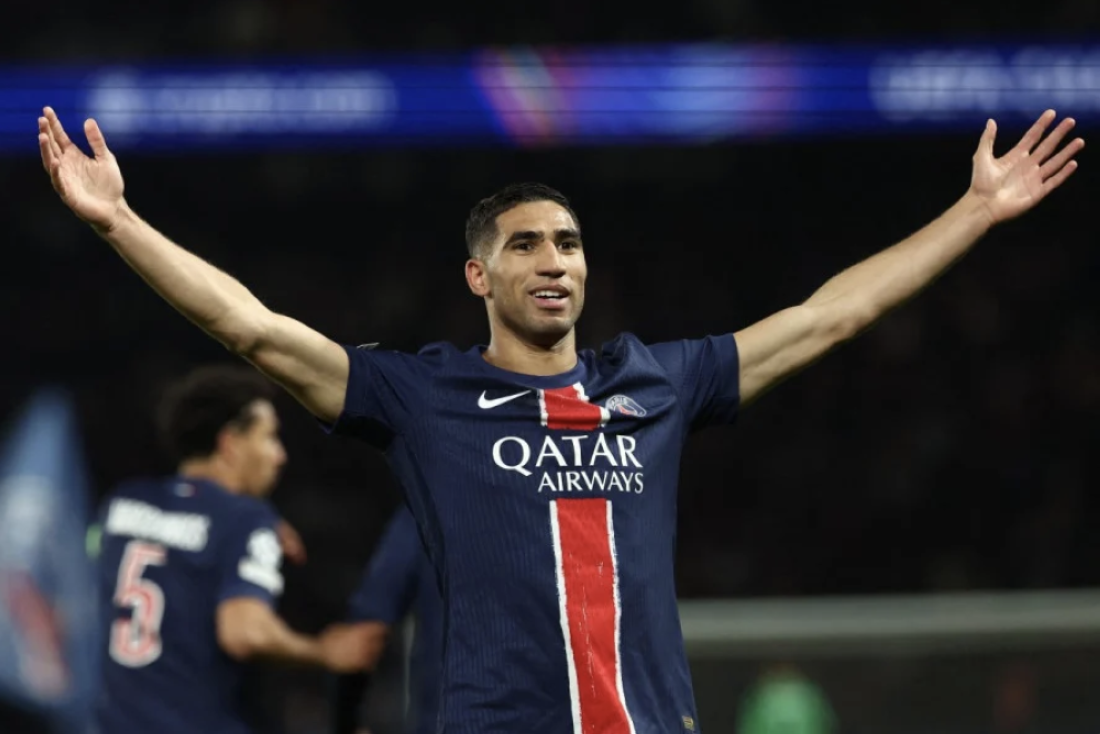

In 2015, a teenager who had just been released for the fourth time typed a promise to himself on social media: he swore he would make it, and that when he did, they would show that post. Eberechi Eze kept the receipt — and then kept the promise.
Greenwich, the cage and a name that means mercy
Eze was born on 29 June 1998 in Greenwich, south-east London, to Igbo Nigerian parents from Mbaise in Imo State. His full name carries his story before football gets a say: Eberechi is widely translated as the mercy of God, and Eze means king. He has lived the first half of that name far more than the second.
His football began where so much south London talent begins — in the cage. "There are the nice parts and the not so nice parts of Greenwich," he told the Independent in 2020, in an interview retold by the Premier League. "I grew up in a not so nice part. It wasn't the easiest life and you don't have as much as other kids around you. The first place we'd go after school is to the cage. We'd stay there till our parents called us in, not eating, playing all day and night."
That cage education is still visible in his game now: the glide, the feint in a phone box of space, the refusal to hurry. Cage football rewards the player who can solve a problem without touching the walls, and Eze learned to play as if the walls were still there — close control first, panic never. It is the same south London school that produced Ademola Lookman, whose own route ran through Sunday league pitches a few miles west, and it produced them both the hard way: outside the academy system that was supposed to find them first.
Four doors close
At nine, Eze was found. Arsenal — the club he supported, the club of his idol Thierry Henry — signed him into their academy. For a boy from Greenwich, that badge became who he was. Then, at 13, Arsenal released him.
"I loved football, I loved playing for Arsenal and that was probably built into my identity at that age as a child," he later told England Football. "It was like: 'This is Ebere, he plays for Arsenal.' So, the moment that I got released, a huge chunk of my identity was gone." He has said he spent a whole week after that decision crying in his room, his mother telling him it would be okay while he could not yet believe her. Months later, playing for his next club against Arsenal, the tears nearly came again on the pitch.
The pattern repeated with a cruelty that starts to look like a system, not bad luck. He turned down Southend United for Fulham, spent two and a half years there he still calls hugely important, and was let go again. A trial period at Reading ended with no contract. Millwall gave him a two-year scholarship, watched him progress through the under-18s and reserves — and then, in April 2016, told him there would be no professional deal. Trials further afield, including Sunderland and Bristol City, came to nothing. The verdict was always some version of the same sentence: the desire did not look like it was there.
"All I could think was: 'If only you knew in my head how much I want this'," he said. His laid-back style was being read as indifference by coaches who had never asked him a question. By the summer of 2016 he was 18, out of football, studying at college and preparing to work part-time in a supermarket — Tesco, by several accounts of that summer — while the academies that had housed him since he was nine moved on to the next intake. This series has told the rejection story before, with Antoine Semenyo, but Eze's version is the extreme case: not one club misjudging him, but four, in a row, before he had played a single senior minute.
The three men at QPR who saw the person first
Queens Park Rangers was the last trial, and it changed because of three people. Chris Ramsey, the club's technical director, took a recommendation and brought Eze into the under-23 set-up run by Paul Hall and Andy Impey. The trio did the opposite of what four academies had done: instead of asking why he looked so relaxed, they set about restoring the confidence the system had taken out of him — afternoon clinics, extra finishing work, belief given before it was earned back.
"They saw potential in me. It was just about bringing it out," Eze said. "I'm hugely grateful to them too because I believe God put them in that position and used them to bring that out of me and to help me along on my journey." That sentence is the key to the man. Eze's Christian faith is not a celebration gesture added later for the cameras; it is the framework he uses to explain his own life, the reason he gives for surviving the years when no professional club in London wanted him. His mother's prayers carried the Arsenal week; his faith carried the four years after it.
The football followed the belief. A loan at Wycombe Wanderers under Gareth Ainsworth in 2017-18 — five goals in 20 appearances — toughened him. Back at QPR, Mark Warburton built the side around him, handed him the No 10 shirt and told his players to give him the ball. Eze answered with 14 Championship goals in 2019-20 and a place in the PFA Championship Team of the Year. In August 2020, Crystal Palace paid around £17 million for him. The boy deemed a luxury player by four academies was now a Premier League No 10 — at a fifth London club, three miles from the cage.
The cruellest day, then Wembley
Palace gave him the stage, and then football tested him again in the cruellest way it knows. In May 2021, after a fine first Premier League season, Eze learned he had been named in England's provisional squad for the European Championship. That same day, in training, he ruptured his Achilles tendon. The call-up and the catastrophe arrived together. The long rehabilitation, and a spell under Patrick Vieira when minutes were hard to find, became another of the valleys his faith is built for: he has said the injury showed him a different version of himself, and that he would not be the person he is without it.
What came next is why this profile exists. Paired with Michael Olise, Eze became half of the most joyful double act in the Premier League — and, off the pitch, Olise and Eze's brother talked him into learning chess, a pursuit he studied through videos of grandmaster openings until he was winning a celebrity chess tournament. It is a lovely detail, and a very Eze one: the player accused of lacking desire quietly out-working people at a second discipline nobody asked him to learn. Palace fans who love Bryan Mbeumo for the same piano-and-chess curiosity will recognise the type.
Then, on 17 May 2025, Eze scored the only goal of the FA Cup final, finishing Daniel Munoz's cross in the 16th minute to beat Manchester City and give Crystal Palace the first major trophy in their history. At the final whistle his message was two words long, the same two words he posted afterwards: only God. A Community Shield followed that summer. The released boy had not just made it — he had delivered the greatest day in his club's history, in the stadium where England had nearly called him before his Achilles went.
Giving the ladder back down
In 2024 Eze and his older brother Ikechi launched the Eze Foundation, a registered charity whose formal objects are the education and training of young people — mentoring, careers events and networking to help them achieve their ambitions. Its work started, inevitably, in south London: making football free for children, running the Eze Invitational grassroots tournament — first held in 2023 on the pitches of his old school, the John Roan School in Greenwich, where he and his brothers played as children — and later expanding into internships and work experience, as Crystal Palace have documented alongside their own Palace for Life Foundation.
"Giving back is in our hearts," Eze said at one Invitational. "We want to expose them to football and to being at a professional club and not having to pay for anything, no stumbling blocks along the way." Read that quote against his own story and it stops sounding like a slogan. Every stumbling block he names is one he personally tripped over: cost, access, a system that only notices children already inside it. The foundation has since carried the same idea into his old school's chess club, donating sets and clocks — the cage kid now funding the quiet room as well as the pitch. He belongs in the same conversation as Bukayo Saka, honoured at the Ballon d'Or last month for funding children's surgery in Nigeria: two sons of African London, using the same city that raised them as the place to spend what football gave them.
Eze was eligible for Nigeria through his parents and chose England, making his senior debut in 2023 and scoring his first England goal against Latvia in March 2025. That choice does not dilute the Nigerian thread in his story — the name, the faith, the family structure that held him together through four rejections are all Mbaise exports to Greenwich. He is, in the best sense, a product of both places.
What a bench role cannot be allowed to become
In August 2025 the circle closed: Arsenal, the club that released him at 13, bought him back from Palace for a reported £67.5 million, and Ian Wright — who made the same Palace-to-Arsenal journey at the same age — fronted the homecoming. Eze took the No 10 shirt, scored a famous hat-trick against Tottenham, the club he had been on the verge of joining, and ended his first season back with a Premier League title and a run to the Champions League final.
This season is the harder chapter, and honesty requires it here. Eze has started only sparingly in the league — 231 Premier League minutes and no league goal so far, two goals in the Champions League including one in the 2-2 draw with Bayern Munich, a start at Slavia Prague on 4 November and an unused substitute's seat for England against Croatia on Thursday night. For most players that is a rotation problem. For Eze it carries an echo he will recognise instantly: once again, a coach is looking at the calmest player in the room and deciding, for now, on someone else. The difference is everything he has built since 2016 — the faith, the foundation, the Wembley medal in a drawer — means a bench spell is a circumstance now, not an identity. Arsenal's next match, at Newcastle on 21 November, is exactly the kind of night his career has always answered.
Beyond the Final Whistle verdict: Eze is the strongest argument in English football against the academy system's confidence in its own judgement. Four professional clubs looked at the same boy and saw a lack of desire; what they were actually seeing was a temperament they did not know how to coach. QPR's three mentors did not change Eze — they believed the version of him that already existed, and Wembley, a £67.5 million homecoming and a foundation in his own name followed. If Arsenal now repeat the old mistake of mistaking his calm for contentment, someone else will benefit the way Palace did. Players like this do not need to be wound up. They need to be trusted, started, and left on the pitch.
Over to you: has Arteta got a plan for Eze, or is Arsenal's No 10 heading for the same hard lesson Palace taught everyone else? Have your say below.