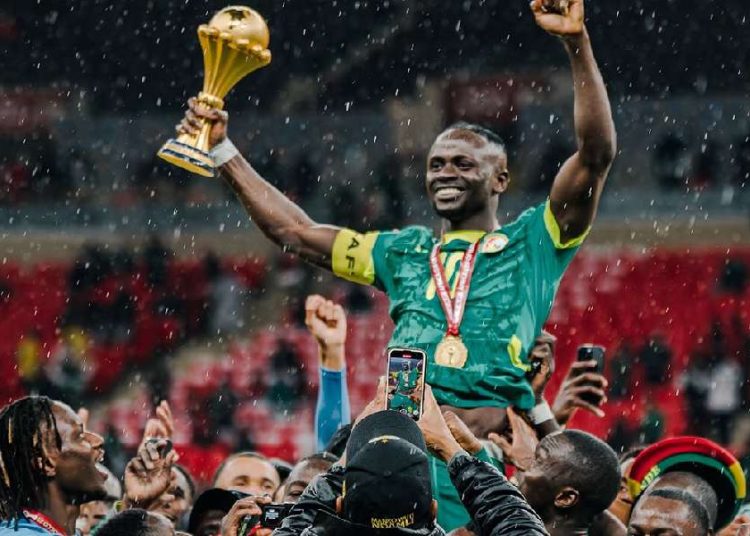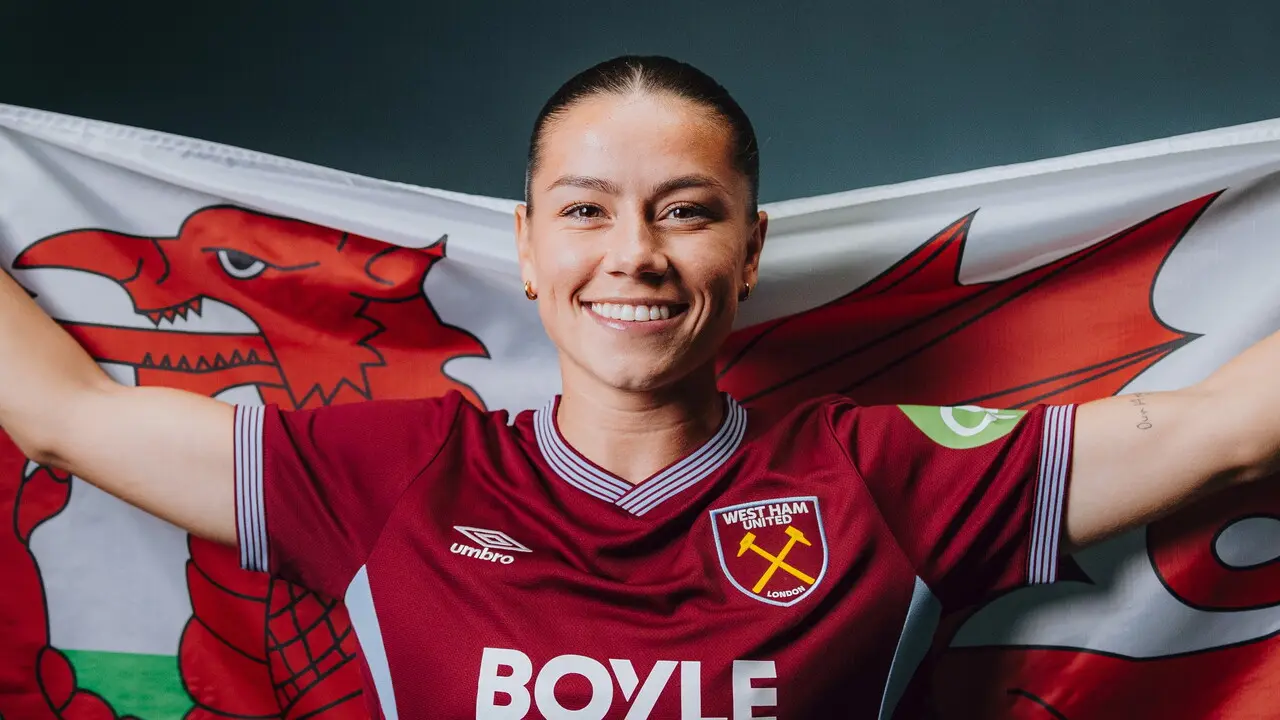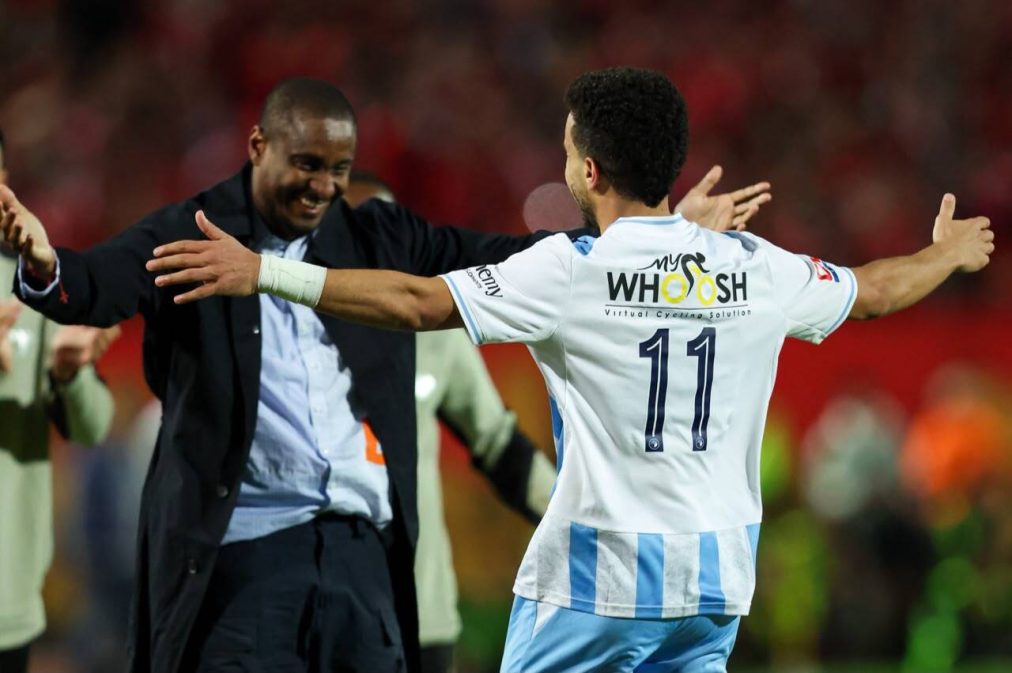

Kylian Mbappé captains France. Jamal Musiala pulls the strings for Germany. Lamine Yamal is Spain's present and its future. Every one of them could have worn an African shirt — and that, in one sentence, is the biggest structural problem African football faces.
Picture the alternative for a moment. A World Cup where Mbappé leads the line for Cameroon, Musiala runs Nigeria's midfield, Bukayo Saka terrorises full-backs for the Super Eagles and Yamal dances down Morocco's right wing. It is not fantasy football. Every one of those players was eligible. Every one of them was lost — not to a rival African nation, but to Europe.
And it happens every single cycle. Africa produces the raw material, Europe's academies refine it, and Europe's national teams collect the finished product. The continent that gives world football so much of its speed, power and imagination keeps watching its finest sons lift trophies in other people's colours.
Two doors out of Africa
The first door is the oldest one: place of birth. Mbappé was born in Paris to a Cameroonian father and an Algerian mother, raised in Bondy, and formed by the French system from childhood. Saka was born in London to Nigerian parents and came through Arsenal's Hale End academy; England was never really a decision for him, it was simply his life. Eberechi Eze, born in Greenwich to Igbo parents from Mbaise in Imo State, actually trained with Nigeria as a youngster before committing to England — his story, of rejection, faith and patience, is one we told in full in our Off The Pitch profile of Eze.
Yamal's case cuts deepest because Morocco genuinely fought for him. Born in Esplugues de Llobregat to a Moroccan father from Larache and an Equatoguinean mother, scouted by Barcelona at six, he was courted by the Moroccan federation as the Atlas Lions rose — and still chose Spain. When a boy has lived his whole life in one country, speaks its language in the dressing room and owes his development to its academies, heritage alone is a hard sell.
The second door is the academy pipeline, and it is wider than the first. Musiala was born in Stuttgart, moved to London at seven, and passed through the Southampton and Chelsea academies, playing for England all the way up to under-21 level. At 16 he moved to Bayern Munich; at 18 he chose Germany. He has said himself that he had good talks with Nigeria and simply picked the place where he felt most comfortable. Read that sentence again. Nigeria did speak to him. Germany just made him feel more at home — earlier, and better.
That is the pattern underneath every case. The federation that caps a boy first, in a system he trusts, usually keeps him. European federations are in the room when he is 15. Too many African federations arrive when he is 22, with a press release and a photo opportunity.
The bill Africa keeps paying
On the pitch, the cost is measured in ceilings. Africa does not lose squad players through this door; it loses generational players — the ones who turn quarter-final teams into champions. Set our Best African XI of All Time beside an XI of the ones that got away and the second team would start as favourites. The continent's honour roll, which we celebrated in our look at the greatest African players in Premier League history, is extraordinary — and it is still only the half of the story that stayed.
The ceiling shows in the record books. Before Morocco's run in 2022, no African team had ever passed the World Cup quarter-finals — Cameroon in 1990, Senegal in 2002 and Ghana in 2010 all stopped at the last eight, each of them one result from history. That is what a thin top end does: not failure, exactly, but a recurring limit, hit by generation after generation. The players who might have pushed those teams one round further were, in case after case, wearing the shirts of the countries that knocked them out.
Off the pitch the bill is quieter but just as real. A superstar capped by France or England carries commercial weight, sponsorship gravity and a federation with FIFA's ear. Every defection shrinks Africa's voice in the rooms where calendars, money and World Cup slots are divided. Worse, it sends a signal to the next 14-year-old in an academy in Paris, Amsterdam or London: the serious career wears a European shirt. Each star who chooses Europe makes the next boy's choice easier — and Africa's problem compounds.
Morocco wrote the blueprint
Then came Qatar 2022, and proof that the current can be swum against. As Reuters reported during that World Cup, fourteen of Morocco's 26-man squad were born outside the country — more than any other team at the tournament — and that squad became the first African nation in history to reach a World Cup semi-final.
None of it was luck. Morocco's federation turned diaspora recruitment into a structured exercise: scouts permanently based across Belgium, France, Germany, Italy, the Netherlands and Spain, eligible boys identified in their mid-teens, and relationships built with families years before a senior call-up was on the table. Achraf Hakimi, born in Madrid and formed in Real Madrid's academy, chose Morocco and became the face of the team. Even the coach, Walid Regragui, was born in France. Morocco did not wait for its diaspora to feel Moroccan; it went and made them feel wanted.
The raw material is not unique to Morocco, either. Reuters noted during that tournament that Moroccans are one of the largest migrant populations in Europe, estimated at some five million people — and Nigeria's diaspora in Britain and America, Ghana's in Germany and Italy, Senegal's in France, are footballing goldmines of the same kind. The boys are out there, in the academies of a dozen European countries, eligible and watching. The only question is which federation knocks on the door first.
The masterpiece of the model is Brahim Díaz. Born in Málaga, capped once by Spain in a 2021 friendly, he was pursued by Morocco for years — not with a last-minute phone call but with a long, patient courtship that made him the centre of the project. In March 2024 he switched to the Atlas Lions. Algeria's squads have leaned on French-born talent for a generation, and Senegal persuaded France-raised Kalidou Koulibaly to anchor their defence; the federations that treat recruitment as a system, not an afterthought, are the ones winning these battles.
The rule that reopened the door
There is also, now, a second chance built into the laws of the game. In September 2020, FIFA's Congress approved the first modern overhaul of its eligibility rules, as the Associated Press reported at the time. A player who has been capped can still switch association — once — if he played no more than three competitive senior matches, all of them before his 21st birthday, never appeared at a World Cup finals or a continental finals tournament, already held the new country's nationality when he first played for the old one, and has gone at least three years since his last appearance.
The conditions are strict, but the principle is revolutionary: an international career is no longer decided forever by a handful of caps handed to a teenager. Brahim's Spain appearance came in a friendly, which never tied him at all — but for the next Brahim, the one with two competitive caps and a cooling club career in Europe, the 2020 rule is a genuine door back. It only helps a federation that is watching, counting caps and ready to move. Which brings us to the uncomfortable part.
What has to change at home
Start with the calendar. Recruitment has to begin at 15, not 25: permanent scouting networks in London, Paris, Amsterdam, Madrid and Brussels, staffed by people who know the academies and speak to parents as a matter of routine. These decisions are made at kitchen tables, by mothers and fathers weighing which federation will look after their son. Win the family and you usually win the player.
Then match the basics a dual national sees on the other side. Organised camps. Working facilities. Bonuses paid on time, every time. A federation that cannot organise flights or kit is asking a boy raised at St George's Park or Clairefontaine to take a leap of faith — and boys with options do not leap. Morocco's other lesson is that none of this requires European money; it requires European organisation, which is a choice.
Finally, use the rule. Every serious federation should keep a live list of its dual nationals abroad — their ages, their cap counts, their three-year clocks — worked with the same seriousness as a transfer target list. The window the 2020 reform opened is narrow and it closes a cap at a time.
Beyond the Final Whistle: Africa does not have a talent problem; it has a retention problem. Mbappé, Musiala, Saka and Yamal are not traitors and they were never really "stolen" — they were recruited, early and properly, by systems that wanted them more and showed it sooner. Morocco proved the flow is not destiny. Until the rest of the continent recruits its own sons with the same hunger Europe does, the best African team at every World Cup will keep wearing somebody else's colours.
Which one hurts the most — Mbappé, Musiala, Saka or Yamal? And which dual-national should your country move for right now, before the door closes? Tell us in the comments.